travel-decisions
Is Florence Worth It If You Care More About Atmosphere Than Landmarks?
A decision-led look at whether Florence rewards travelers who prioritize mood, wandering, and neighborhood feel over museum queues and landmark counts.
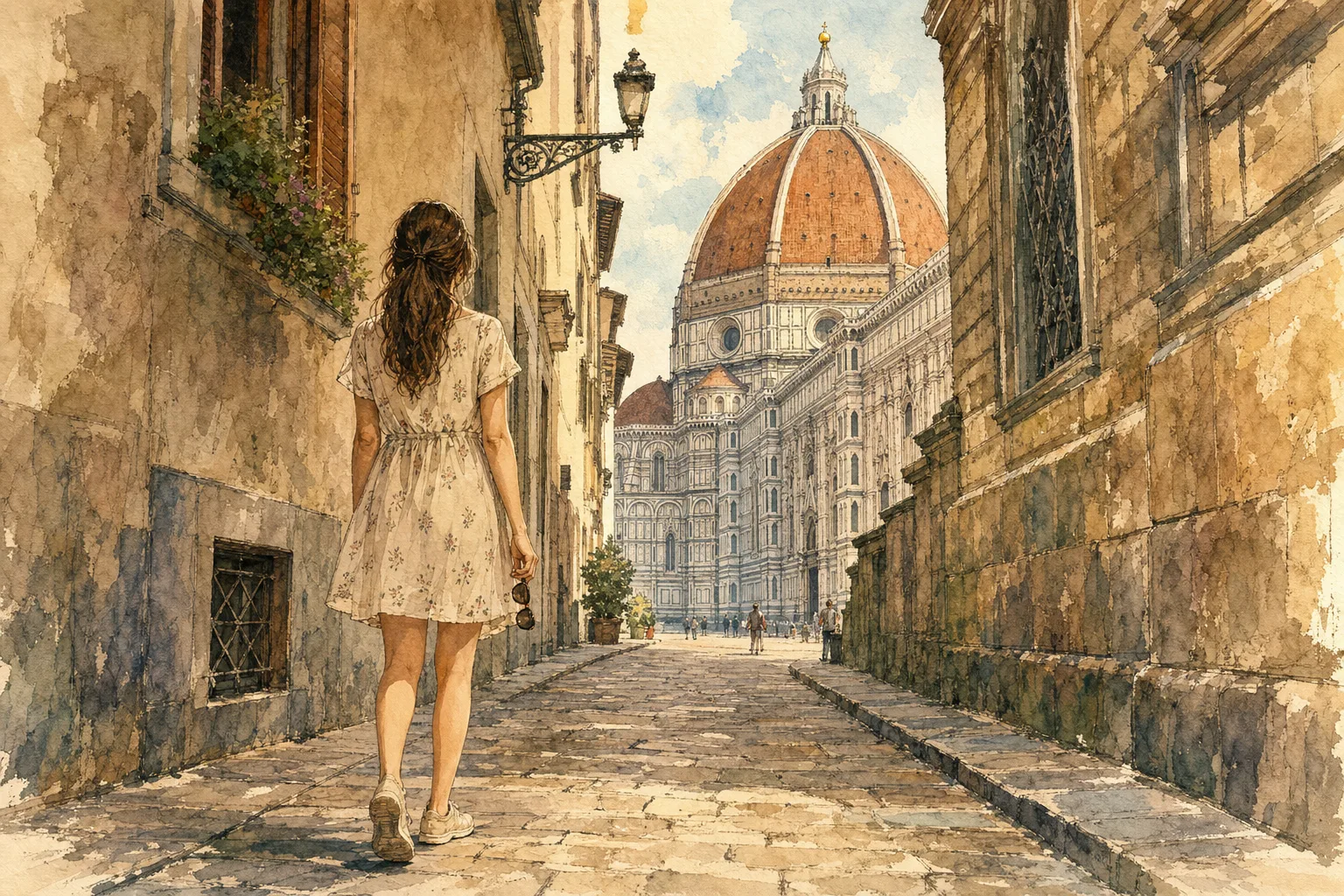
Florence is one of the easiest cities to romanticize and one of the easiest to mis-size. Atmosphere-first travelers often assume that beauty density alone will carry the whole trip. Sometimes it does. Sometimes the same compactness that makes Florence feel intimate also makes it feel finished faster than expected, especially if you are comparing it to a larger city with more neighborhood range.
That is the real decision here. Florence is not just "beautiful instead of famous." It is a small, concentrated city where mood comes quickly and repetition comes quickly too. For some travelers that is exactly the point. For others, it is the reason the trip feels slighter than the photos suggested.
Quick Verdict
Strong fit if: you build trips around neighborhoods, food, evening walks, and being in a place rather than seeing a place. Florence rewards you almost immediately.
Weak fit if: your satisfaction comes from a high count of major sights per day, or from big-city density and variety. Florence's historic core is small, and after two days the landmark menu is largely done.
The short version: an atmosphere-first traveler can have an excellent three days in Florence without setting foot in the Uffizi or the Accademia. A landmark-first traveler with only two days will often feel that Florence was pleasant but slight, and would have preferred Rome.
Best for First-Time Visitors
First-time visitors to Italy are the group most at risk of the expectation mismatch. The marketing pushes the Duomo, David, and the Uffizi, so the trip gets planned around tickets and time slots. That itinerary works against atmosphere.
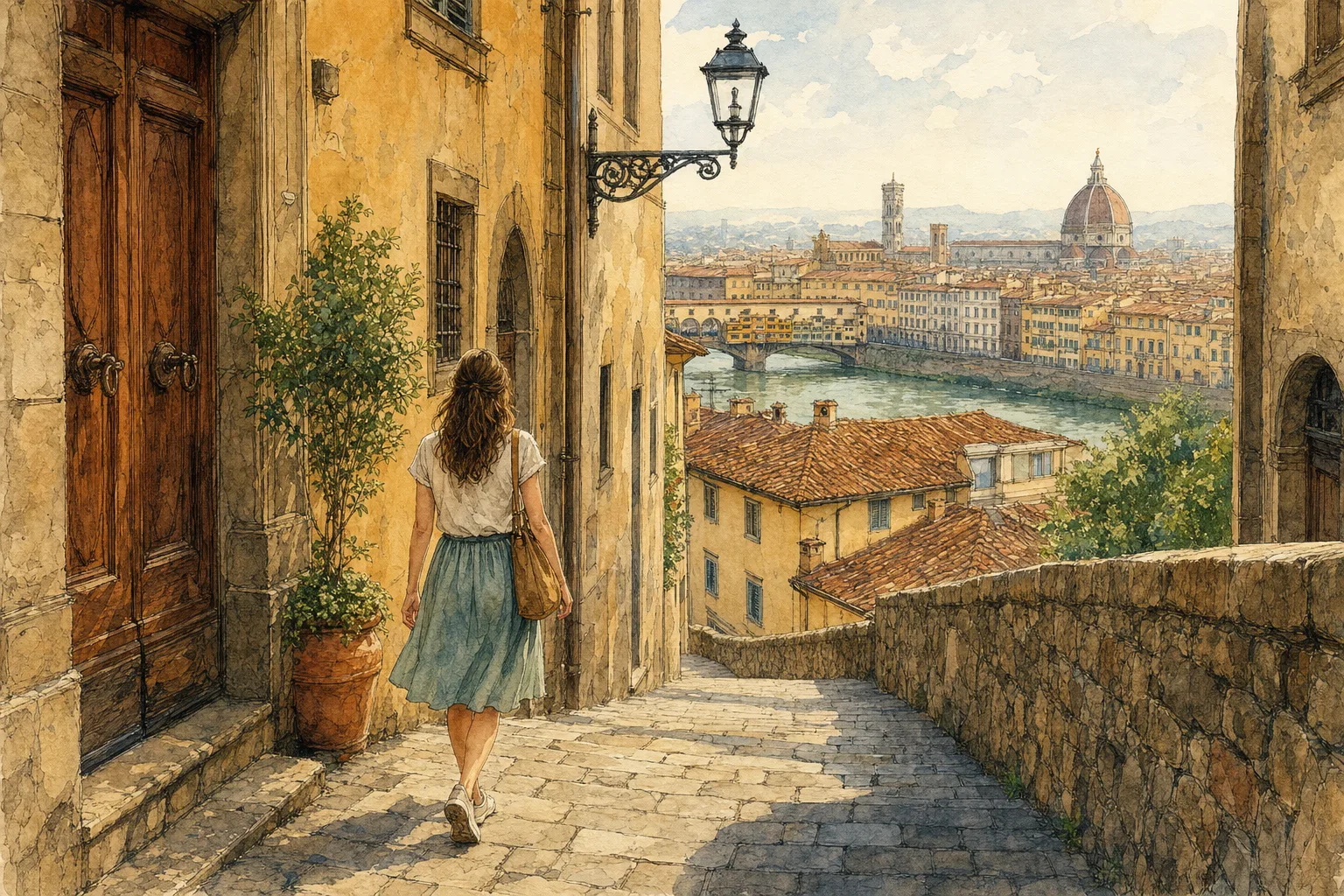
If this is your first time and you already know you lean atmosphere-first, the practical move is to pick two landmarks you genuinely want (often the Duomo exterior and one museum) and treat the rest of the trip as neighborhood time. Anchor the day around a long lunch in Oltrarno, an aimless afternoon walk, and sunset at Piazzale Michelangelo. That structure gives a first-timer enough recognizable Florence to feel oriented, without trading mood for ticket logistics.
Photography-led first-timers do especially well here because the city's light, scale, and material palette (stone, ochre, terracotta, river) reward walking over queueing.
Best for Couples
Florence is one of the easier European cities to plan as a couple precisely because it does not demand a heavy itinerary. The historic center is walkable end to end, dinner reservations matter more than museum reservations, and the Arno gives the city natural evening pacing.
Couples who want mood over checklist should:
- Stay in Oltrarno, not next to Santa Maria Novella station.
- Treat one full day as a no-museum day.
- Book one slightly nicer dinner in San Niccolo or San Frediano rather than three average ones near the Duomo.
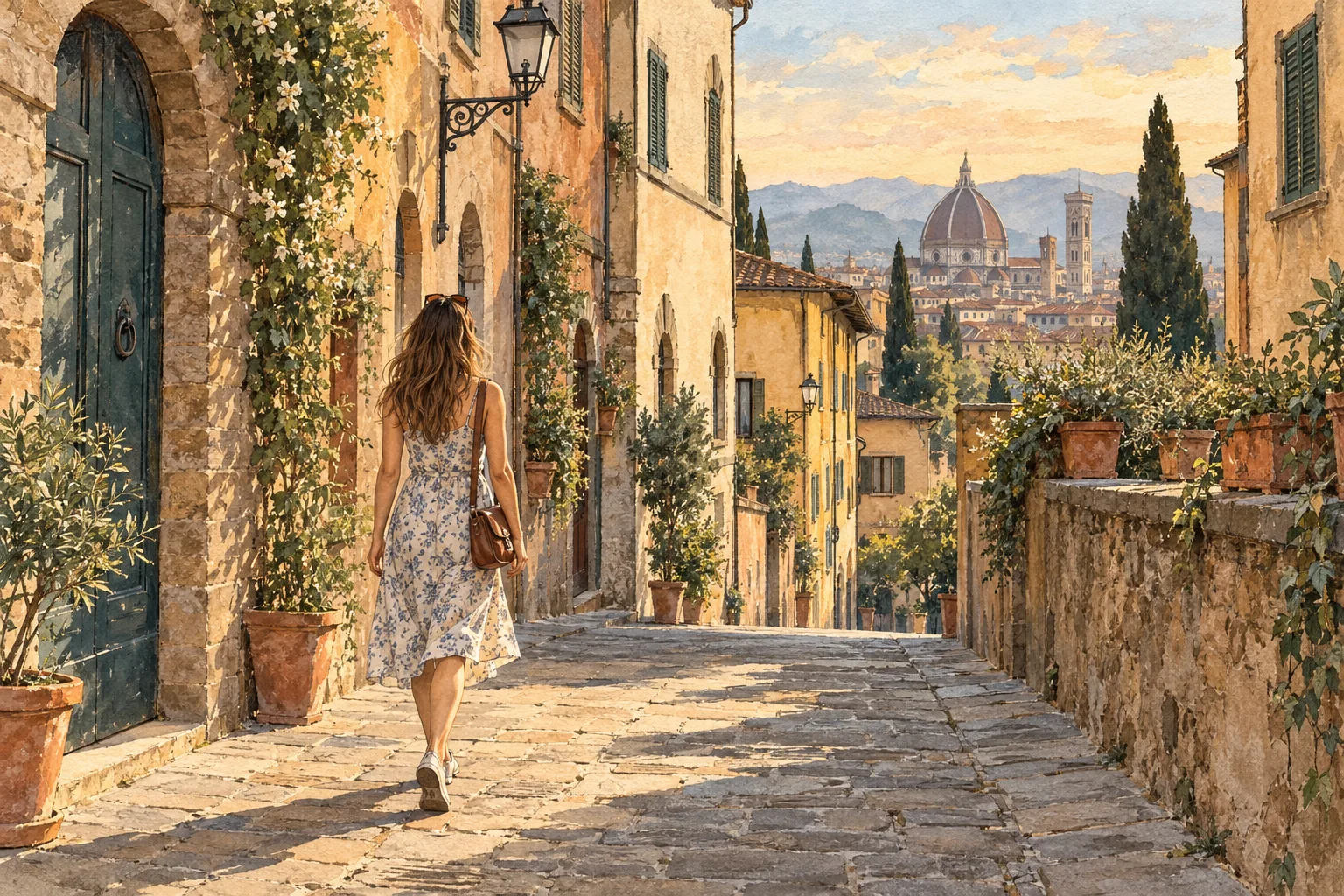
- Walk to Piazzale Michelangelo and San Miniato al Monte at least once. The basic round trip from Ponte Vecchio is about 2 miles and takes at least an hour, and it is the single highest atmosphere-per-effort move in the city.
Where couples mismatch: if one person is landmark-driven and the other is atmosphere-driven, Florence amplifies that gap because there is not enough landmark volume to keep the first person busy while the second wanders.
Best for Slow Travelers
This is Florence's strongest fit. Slow travelers who stay four to seven nights get the city Florence actually is: morning markets, repeat visits to the same cafe, a half-day in Fiesole (about a 30-minute bus ride from the city center), an unhurried afternoon in a single museum instead of three.
Slow travelers also unlock the secondary network: commuter trains from Rifredi and Campo di Marte connect to Santa Maria Novella every 10 minutes, which makes day trips into wider Tuscany low-friction. Florence as a base, rather than Florence as a sightseeing target, is where the city most clearly pays off.
If your travel style is one neighborhood per day, one meal that takes two hours, and one walk with no destination, Florence is built for you.
Best for Low-Stress Travelers
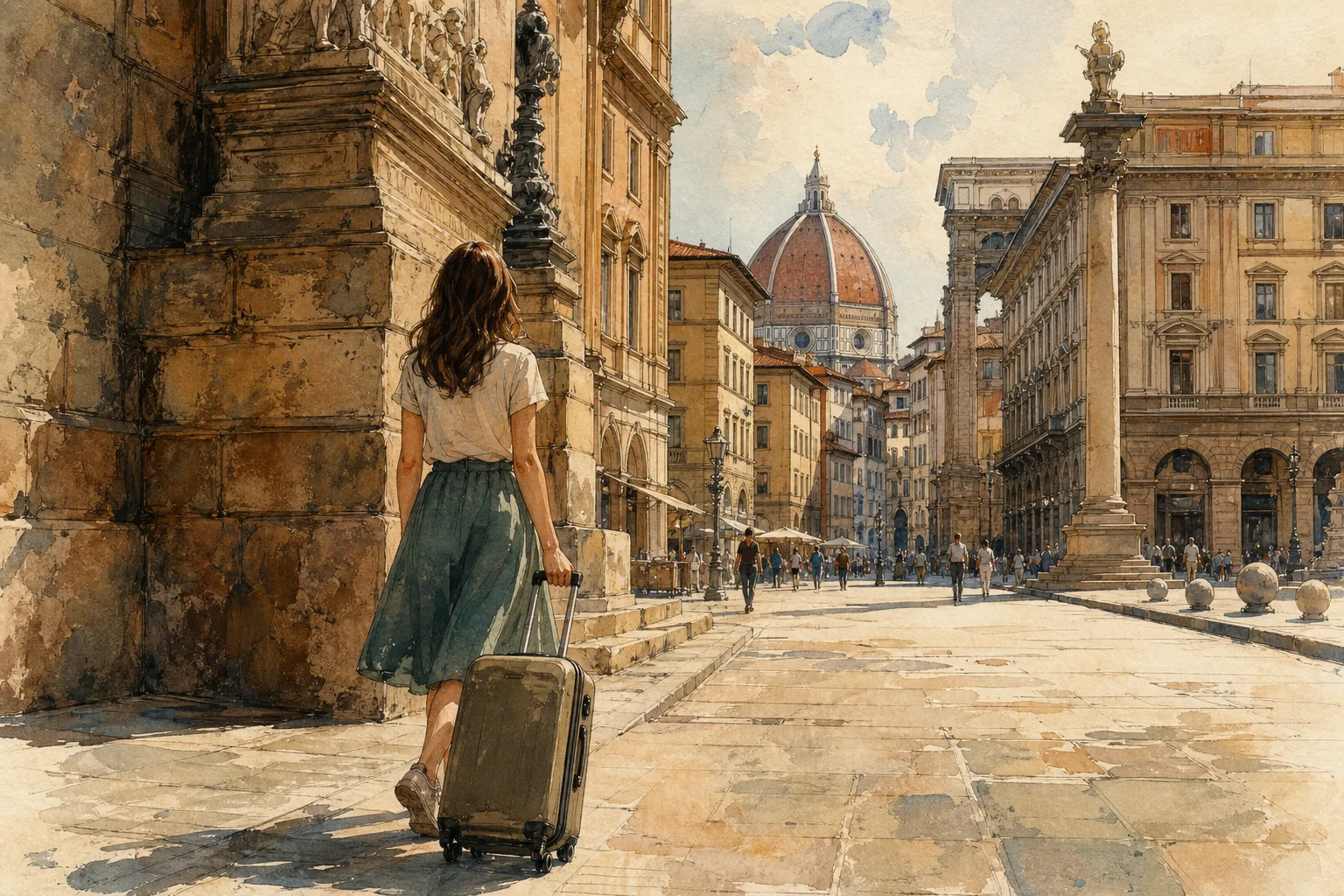
Florence is moderately low-stress, with one caveat. The geography is forgiving: Santa Maria Novella (SMN) train station is about a 10-minute walk from the Duomo, so arrival logistics are simple. Baggage storage at SMN's Kipoint near Platform 16 costs 6 euros for the first five hours and 1 euro per additional hour, which makes an arrival day or a departure day easy to absorb without checking in early.
The caveat is crowds. In peak summer, the area between the Duomo, Ponte Vecchio, and the Uffizi is congested in a way that erodes the mood the city is famous for. Low-stress travelers who also want atmosphere should either visit off-peak (late February, March, or November) or stay in Oltrarno and only cross the river when needed.
Cost is the other stress vector. The average Florence hotel runs around 118 dollars, but rises to roughly 221 dollars during the June to August peak. February rates can run about 34 percent lower than peak. If budget anxiety is part of your stress profile, the season choice does more for you than any other single decision.
Best for Niche Interests
Artisan Workshops and Small Ateliers
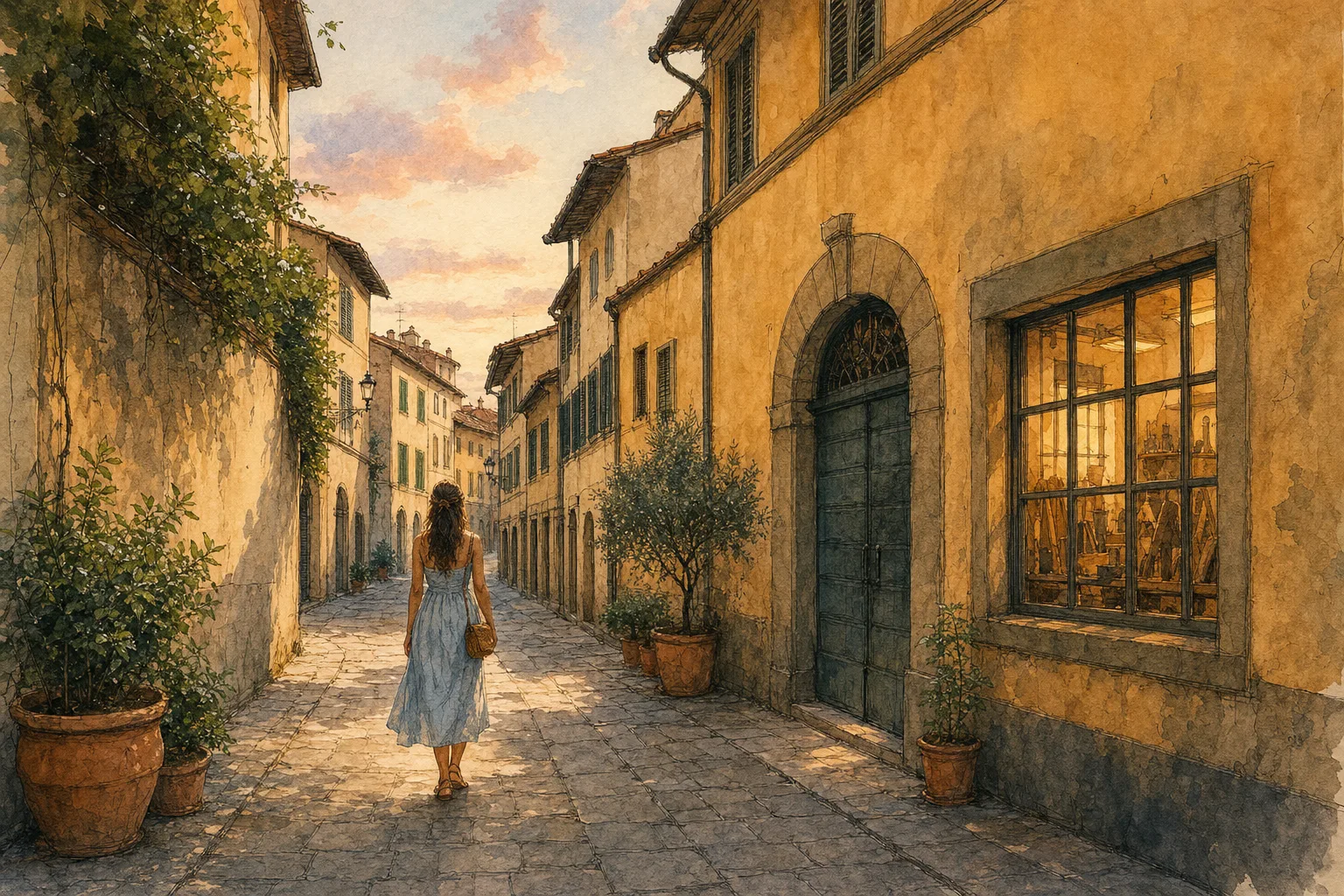
Oltrarno is the clearest Florence artisan workshops neighborhood for travelers who want the city's atmosphere to have a visible working layer. Around San Frediano and the quieter lanes beyond the river, small leather, jewelry, restoration, and decorative-arts workshops make a slow walk feel more specific than another circuit of the headline squares. The fit is strongest if you are happy to look through open workshop fronts and let craft shape the route, rather than treating every stop as a purchase.
Specialty Coffee and Wine Bars
Florence specialty coffee is a compact niche rather than an all-day cafe culture, but it gives atmosphere-first travelers a useful morning rhythm before the center becomes crowded. Later, the enoteche of San Frediano and San Niccolo suit the same travel style: choose one neighborhood, stop for a glass of Tuscan wine, and let the evening unfold on foot instead of crossing the city for a checklist venue. This works best for travelers who value a few repeatable rituals over a long list of famous addresses.
Traveler Type Table
The point of this table is not to rank traveler types but to show where the fit actually comes from.
| Traveler type | Florence fit | Why | Watch out for |
|---|---|---|---|
| Atmosphere-first | Strong | Mood is the city's product, not its by-product | Skipping Oltrarno entirely |
| Photography-led | Strong | Compact scale, consistent light, walkable | Shooting only the Duomo area |
| Slow traveler | Strong | Rewards repeat visits and base-city use | Booking too few nights |
| Couple | Strong | Walkable, food-led, evening-friendly | Mixed atmosphere/landmark priorities |
| Low-stress planner | Moderate | Easy logistics, but peak crowds | June to August in the center |
| First-timer to Italy | Moderate | Easy to navigate, but feels small | Overbooking museum tickets |
| Landmark-first | Weak to moderate | Famous sights exist but cluster fast | Two-day trips feel thin |
| Low-stamina | Moderate | Flat center, but cobblestones and hills to viewpoints | Climbing to Piazzale Michelangelo |
Common Mismatches
The Florence mismatch is usually not failing to appreciate the city. It is misjudging how much compact beauty is enough for your trip style.
- The "beauty means endless variety" mismatch. Travelers arrive expecting Florence's visual beauty to keep unfolding like a larger capital. Instead, they realize the center is compact and the atmospheric payoff repeats quickly unless they enjoy repetition on purpose.
- The Duomo-area hotel trap. Staying inside the tightest tourist ring saves walking time but removes the neighborhood evenings that are the actual reason atmosphere-first travelers came. Oltrarno is the correction because it gives the trip somewhere to exhale after the postcard core.
- The August booking. Peak summer combines the highest prices, the densest crowds, and the heat that makes long walking days unpleasant. Atmosphere-first travelers feel this mismatch the hardest because the thing they came for is the first thing the season removes.
- Treating Florence as a checklist version of Rome. They are not the same city in miniature. Rome rewards landmark density. Florence rewards time spent.
Final Match Recommendation
Florence is worth it if you are willing to plan around mood rather than around tickets. That means at least three nights, a base in or near Oltrarno, one or two chosen museums rather than the full set, an evening walk to Piazzale Michelangelo, and ideally a shoulder-season visit.
Florence is not worth a dedicated trip if your honest preference is landmark volume on a tight schedule. In that case, pair it with Rome and give Florence a short, deliberate slot rather than expecting it to anchor the trip.
The atmosphere-first traveler who picks Florence on purpose, plans lightly, and stays long enough to repeat a few small rituals is the traveler this city was designed to satisfy.
If you are deciding whether Florence should be your only Italy city, pair this with who might regret choosing Florence as their only first Italy city.
FAQ
See the FAQ entries at the top of this page for direct answers on duration, season, neighborhood choice, skipping museums, and landmark-first fit.