travel-decisions
Who Might Regret Venice If They Hate Bridges, Crowds, and Hotel Location Stress?
A regret-avoidance guide for travelers deciding whether Venice fits their tolerance for bridges, crowds, and hotel location stress, with concrete fixes and alternatives.
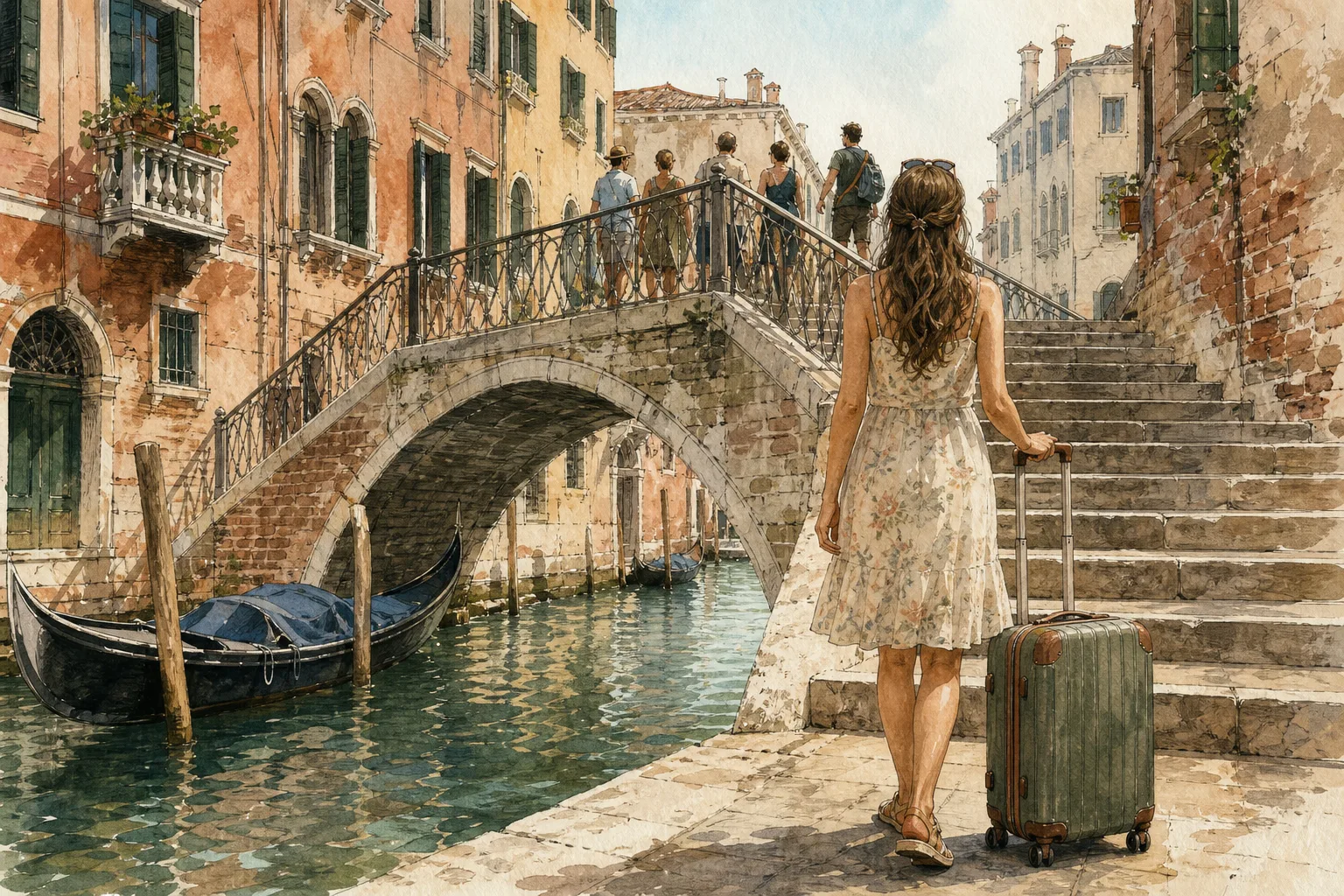
Venice rewards a very specific kind of traveler, and quietly punishes the rest. The canals look effortless in photos, but the city runs on stairs, foot traffic, and the gap between where your hotel is on a map and where it actually is on foot. If you misread any of those three, the trip turns into a slow argument with your suitcase.
This guide is written for the people most likely to regret Venice: travelers who tire on long walking days, who lose patience in dense crowds, and who tend to book hotels by price first and location second. The goal is not to talk you out of going. It is to make sure you go on terms that match how you actually travel.
Quick Verdict
Choose Venice if you can walk for hours on uneven stone, you accept stairs on most bridges, you are willing to pay for a well-located hotel, and you can travel outside peak summer or stay overnight to avoid day-tripper density.
Reconsider Venice, or at least restructure the trip, if any of these are true: you have knee, hip, or back issues; you are bringing a large suitcase and arriving alone; you get overwhelmed in dense crowds; or your budget forces a cheap hotel in a hard-to-reach corner of the city. In those cases the wrong booking can ruin the first and last day of the trip, which is most of a short stay.
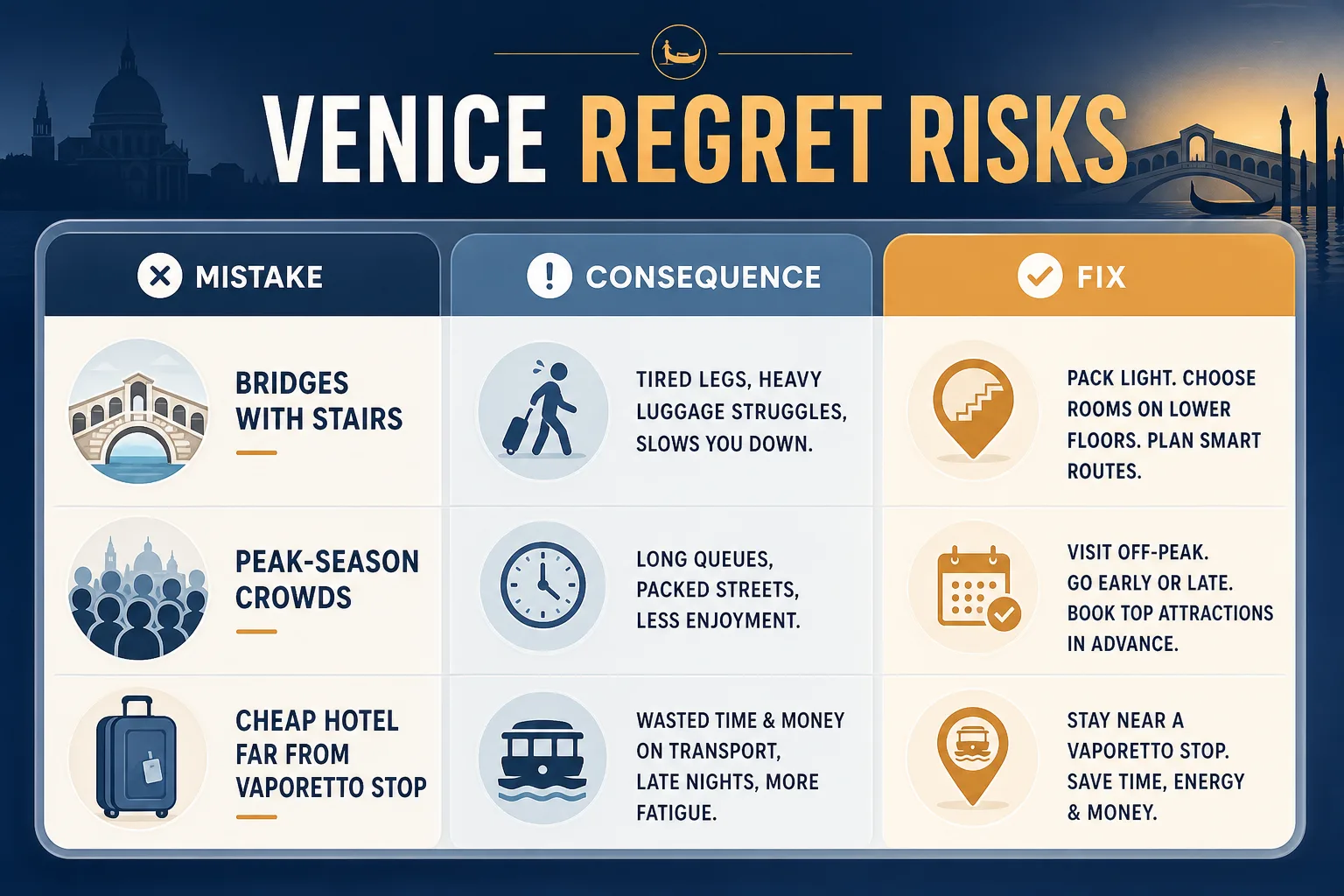 Editorial illustration: A clean comparison layout titled 'Venice regret risks' with three columns labeled Mistake.
Who Will Probably Love It
Venice fits travelers who treat the city itself as the attraction, not a checklist. If you enjoy slow wandering, getting mildly lost, sitting in small squares, and watching light move across water, the friction becomes part of the appeal.
Specifically, you will likely love Venice if you are:
- An atmosphere-first traveler who values mood over efficient sightseeing.
- A culture or food-led traveler willing to eat away from the main tourist streets.
- A couple or small group who can split luggage and share a mid-range, well-located hotel.
- A shoulder-season or off-season visitor who can come in late autumn or winter.
These travelers absorb the stairs and the crowds because the payoff, especially after dark when day-trippers leave, is exactly what they came for.
Who Might Regret It
The travelers most likely to regret Venice share a pattern: their tolerance for movement friction is lower than the city demands, and they only discover that after arrival.
Wrong-fit patterns to be honest about:
- Low-stamina or low-walking travelers who expect to "just take transit." Vaporettos help, but you still walk to and from every stop, often over bridges.
- Older or mobility-aware travelers with knee or hip pain. Stone stairs, repeated, are a different load than flat city walking.
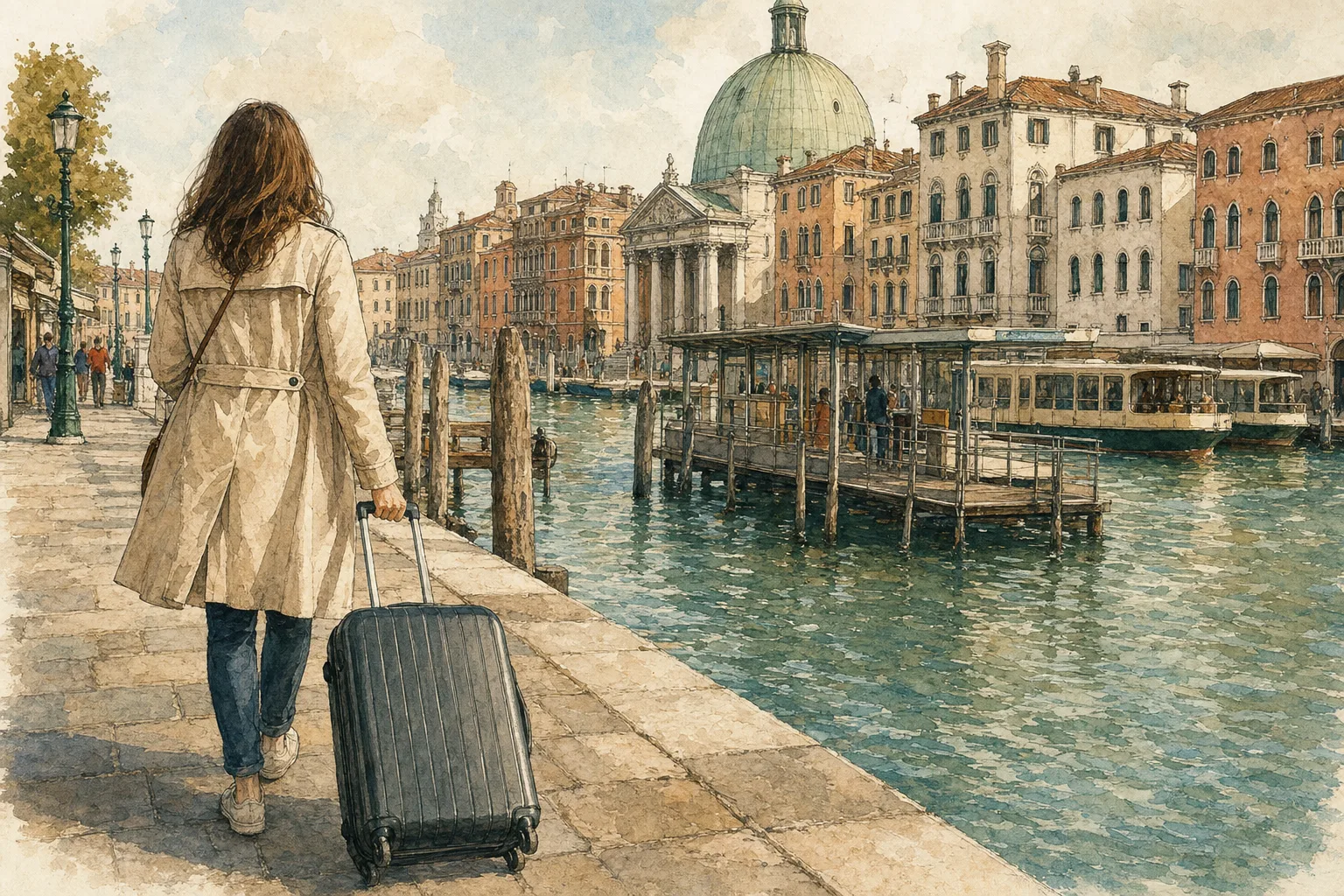
- Heavy-luggage solo travelers. A single large hardshell plus several stepped bridges plus heat equals a bad first afternoon.
- Crowd-sensitive travelers visiting between April and July, on weekends, or on public holidays, when foot traffic in the main corridors becomes genuinely oppressive.
- Budget-first bookers who choose a hotel by price alone and end up 20 minutes and four bridges from the nearest vaporetto stop.
The specific disappointment risk is not "Venice is bad." It is that the city you experience for the first 24 hours, sweating with bags on the way to a poorly chosen hotel, becomes the city you remember.
Mistake and Consequence Table
These are the real decision variables, not generic warnings. Each one maps to a concrete tradeoff you can plan around.
| Mistake | Consequence | Better move |
|---|---|---|
| Booking the cheapest hotel without checking bridge count to the nearest vaporetto | 15 to 25 minute walk with luggage over multiple stepped bridges on arrival and departure | Filter hotels by walking time to a vaporetto stop and number of bridges between |
| Visiting in May, June, or July without a crowd plan | Main routes near San Marco and Rialto packed shoulder to shoulder, slow movement, short tempers | Shift to November or early December, or stay overnight and sightsee before 9 AM and after 6 PM |
| Arriving as a day-tripper on a high-traffic day in 2026 or later | Pay 5 euros if booked four days ahead, otherwise 10 euros, plus the worst crowd window of 8:30 AM to 4:00 PM | Stay at least one night to be exempt from the access fee and to see the city after day-trippers leave |
| Bringing one oversized suitcase as a solo traveler | Bridge stairs become a repeat problem, and vaporetto rules cap luggage at three pieces per passenger up to 150 cm combined dimensions | Pack into two smaller bags or pay for a private water taxi on arrival and departure |
| Choosing a vaporetto with a fourth bag to save money | Additional full adult fare charged for each extra bag, plus the stress of managing them on a crowded boat | Stay within the three-bag allowance or split travel with a companion |
| Assuming Mestre and Venice are interchangeable | Cheaper bed, but evenings in Venice require a train and walk back, killing the atmosphere you came for | Stay in Venice for at least the nights you care about, use Mestre only for budget overflow |
Hidden Friction Points
Most travelers underestimate four specific frictions until they are inside them.
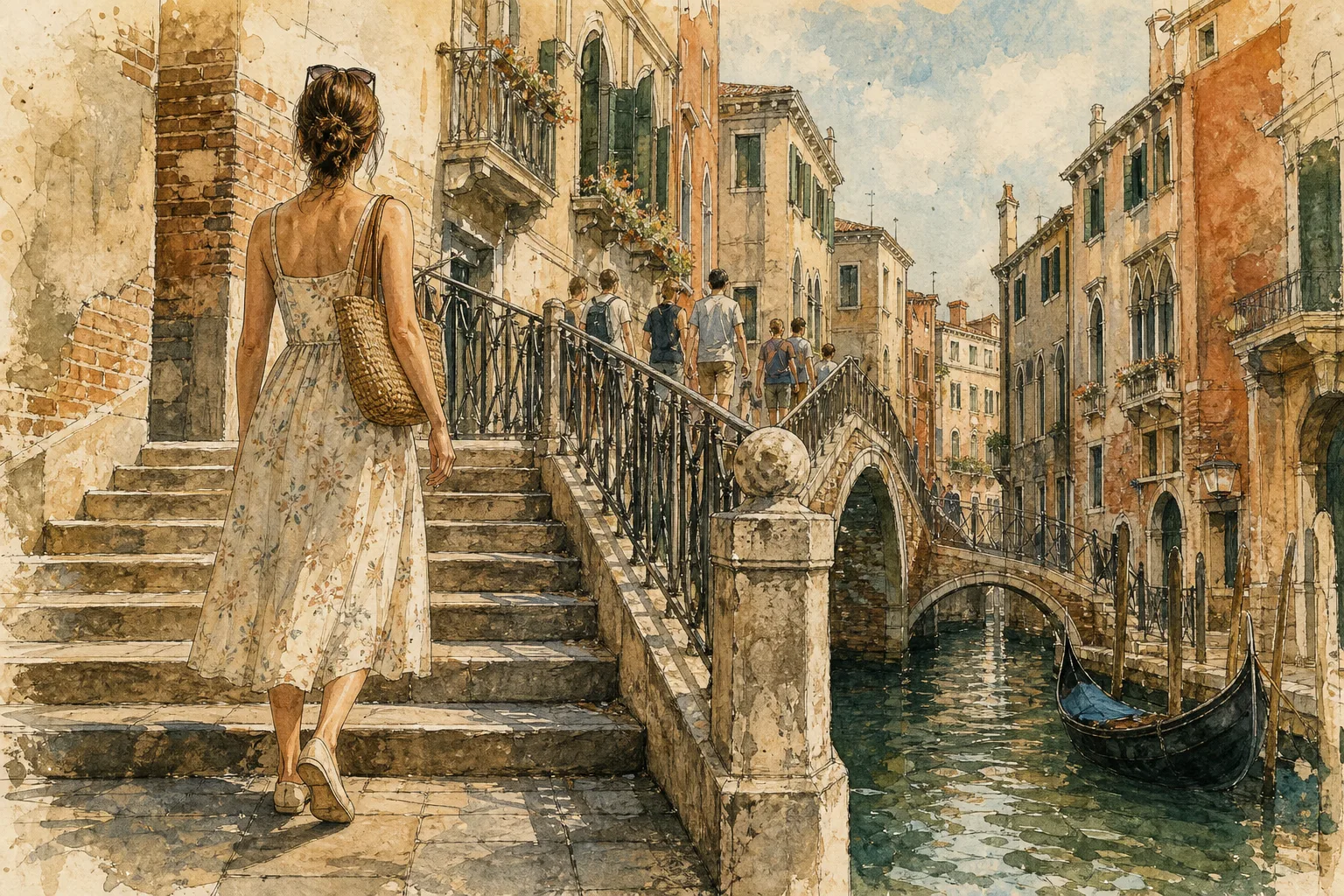
Bridge fatigue. Venice has hundreds of bridges and most involve stairs. A 600-meter walk on a map can include six to ten step-ups and step-downs, each one repeated with a suitcase. Knees notice this by day two.
Crowd pressure. From April through July, and on weekends and holidays year-round, the historic center can absorb up to 75,000 tourists in a day against a resident population under 50,000. The pressure concentrates in narrow streets between the train station, Rialto, and San Marco. If you are crowd-sensitive, those corridors are where you will feel worst.
Hotel location risk. A hotel that looks central on a map can sit on the wrong side of a canal with no nearby bridge, forcing a long detour. Two hotels at the same price can have wildly different real walking times to the nearest vaporetto stop. This is the single biggest preventable regret.
Luggage stress. Public transit caps matter. Vaporettos allow up to three pieces of luggage per passenger, each within 150 cm of combined length, width, and height. Exceed it and you pay an additional full adult fare per extra bag. Combine that with bridge stairs and a hot summer afternoon and the cheap arrival becomes the most expensive part of your day in stress terms.
How to Make It Easier
You cannot remove these frictions, but you can shrink them.
For bridge fatigue: pick a hotel within one or two bridges of a vaporetto stop, do hard sightseeing days in two shorter sessions instead of one long loop, and wear genuinely broken-in flat shoes, not new ones.
For crowd pressure: travel in November or early December if you can. If you must come in peak season, treat 7 AM to 9 AM and after 6 PM as your sightseeing windows and treat midday as cafe and museum time. Avoid the Rialto and San Marco corridors between 11 AM and 3 PM on weekends.
For hotel location risk: before booking, drop the hotel address into a map, find the nearest vaporetto stop, and count the bridges along the walking route. If you cannot tell, message the hotel and ask directly. Confirm whether they offer luggage porter service or a water taxi pickup at an arrival point near their entrance.
For luggage stress: pack into two smaller bags rather than one large one. If you are arriving alone with heavy bags, a private water taxi from Marco Polo Airport, roughly 110 to 130 euros, is sometimes the difference between starting the trip well and starting it angry. Inside the city, private water taxis run about 70 to 90 euros for up to four people, which is reasonable when split.
Better Alternatives
If you read the friction list and quietly recognized yourself, you have real alternatives that keep the Italy trip and lose the regret.
- Stay in Mestre, day-trip into Venice. You lose evening atmosphere but gain a flat walk to your hotel, easier luggage handling, and lower nightly rates. Reasonable if Venice is one stop in a larger Italy trip.
- Spend one night in Venice, the rest of the week elsewhere. Verona, Padua, and Bologna are well-connected by train, much flatter, and far less crowded. You still get the Venice experience without five days of stairs.
- Swap Venice for a lagoon-adjacent base. Some travelers do better staying in a quieter Veneto town and visiting Venice on a single planned day rather than living inside the friction.
- Replace Venice with a different atmospheric Italian city. If what you actually want is mood, water, and old stone, places like Bologna, Lucca, or Trieste deliver that with less stair load and lower crowd density.
None of these are downgrades. They are matches.
Self-Checklist
Run through this honestly before booking. If you check three or more, restructure the trip.
- I have ongoing knee, hip, or back issues that flare up on stairs.
- I am traveling alone with one large suitcase over 20 kg.
- I am planning to visit between mid-April and late July.
- My travel dates fall on a weekend or public holiday.
- My current hotel choice is more than 10 minutes walking from a vaporetto stop.
- I have not checked how many bridges sit between my hotel and the nearest stop.
- I picked my hotel mainly on price and have not confirmed luggage support.
- I am arriving after dark on my first night.
- I get visibly stressed in dense crowds and have no plan to avoid peak corridors.
- I am planning a single day-trip on a high-traffic day in 2026 without budgeting for the access fee.
Zero or one check: you are likely fine. Two checks: fixable with better booking. Three or more: change the structure of the trip, not just the hotel.
FAQ
Is Venice doable in summer with a stroller or wheelchair? It is possible but requires real planning. Stairs on bridges are the main barrier, and only some routes have ramps. Choose a hotel with step-free water access, use vaporettos for most transit, and accept that some interior alleys will not be reachable. Going outside peak summer also reduces crowd pressure on the limited accessible routes.
How many nights in Venice is enough without burning out? For most travelers prone to walking fatigue, two nights is the sweet spot: one full day plus two half-days, with an evening to see the city quiet. Three nights works if you build in a rest afternoon. Beyond that, fatigue tends to outpace enjoyment unless you are an atmosphere-first slow traveler.
Is staying near the train station a good idea for easy luggage handling? Yes for arrival and departure logistics, no for atmosphere. Hotels near Santa Lucia minimize bridges with luggage but put you in one of the busier, less charming corners. A reasonable compromise is one night near the station on arrival, then moving deeper into the city for the remaining nights once your bags are lighter or stored.
Will the Venice Access Fee really change my decision? For most travelers, no. It only applies to day-trippers aged 14 and over on specific high-traffic days between 8:30 AM and 4:00 PM, at 5 euros booked four days ahead or 10 euros otherwise. Overnight guests are exempt. It does, however, push the calculation toward staying at least one night rather than rushing through as a day trip.
Are budget hotels in Venice ever a good idea? Sometimes, mostly in low season. Budget hotels can run roughly 60 to 120 euros per night in low season and 90 to 160 euros in high season, with November and December typically cheapest and May often the most expensive. The trap is that the lowest prices often sit in inconvenient locations. If you book budget, prioritize location over decor and confirm the bridge count to the nearest vaporetto before you pay.