travel-decisions
Is Kyoto Worth It If You Want to Enjoy It More Comfortably?
A traveler-fit decision guide for Kyoto when comfort, atmosphere, and a relaxed pace matter more than ticking landmarks or chasing bargains.
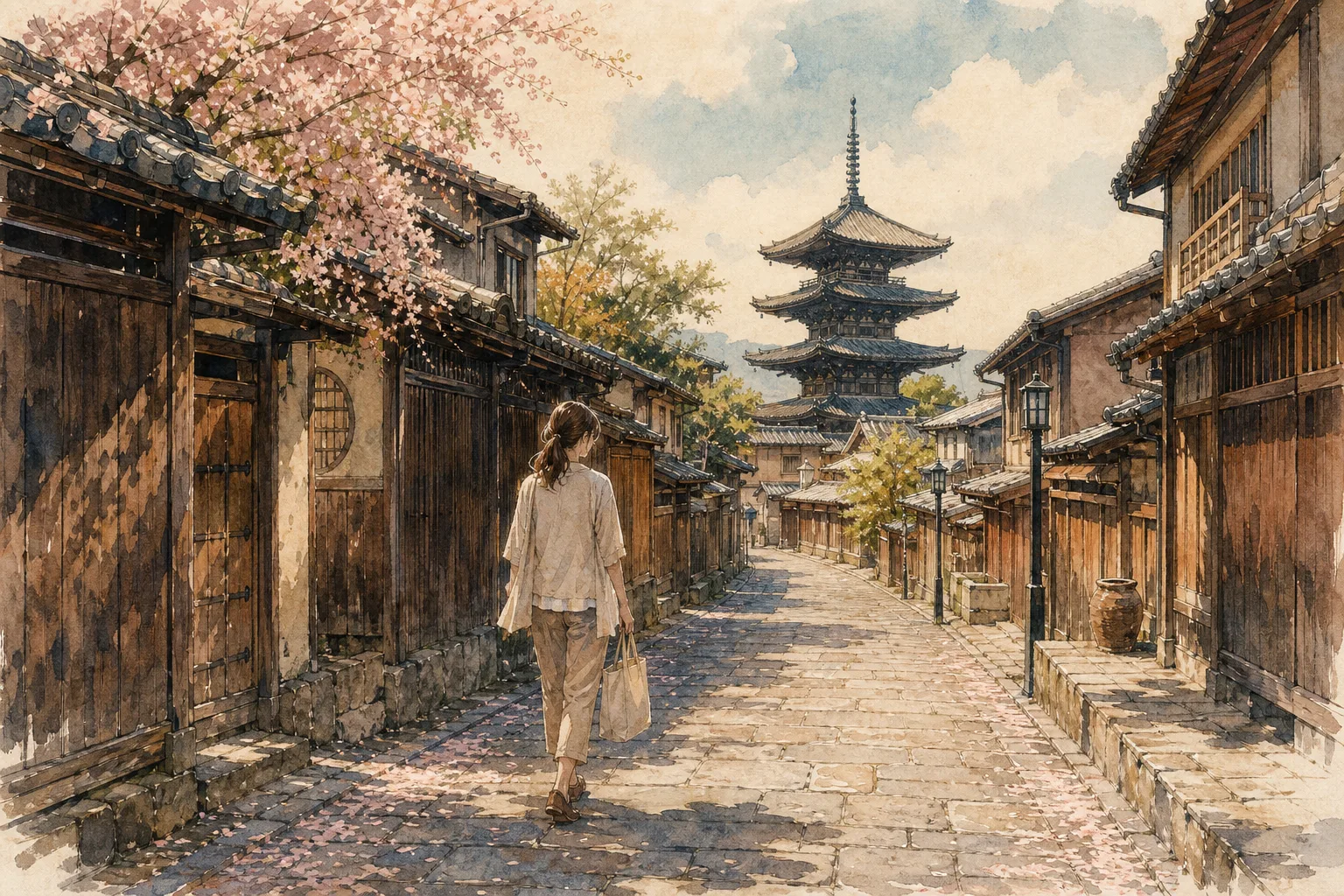
Comfort in Kyoto is not mostly about luxury. It is about protecting the parts of the day when Kyoto actually feels good. A better-located hotel, an early start, and fewer zone changes usually do more for comfort than spending more on the room itself. The city rewards travelers who remove friction before the day begins, not travelers who try to out-hustle it once buses and crowds are already in motion.
That makes Kyoto a different comfort question from places where convenience and comfort mean the same thing. Here, you are deciding whether you are willing to pay in planning, timing, or hotel location to keep the trip soft.
Quick Verdict
Kyoto is worth it if you are willing to slow down, start your mornings earlier than you normally would, and pay a little more to stay in the right neighborhood. For travelers who care about atmosphere and comfort, that combination is exactly what the city rewards.
It is a weaker fit if you are bargain-hunting on hotels, trying to cram eight sights into a day, or expecting a quiet, untouched old city in the middle of peak cherry blossom or autumn foliage weeks. In those cases, Kyoto can feel expensive and crowded without delivering the calm you came for.
Strong fit if you:
- Want mood and setting over a long sight-checklist
- Will shift your day earlier to beat crowds
- Accept paying for hotel location instead of saving on it
Weak fit if you:
- Need maximum sights per day to feel the trip was worth it
- Are unwilling to book 6 to 8 months ahead for peak seasons
- Expect a sleepy, undiscovered old town
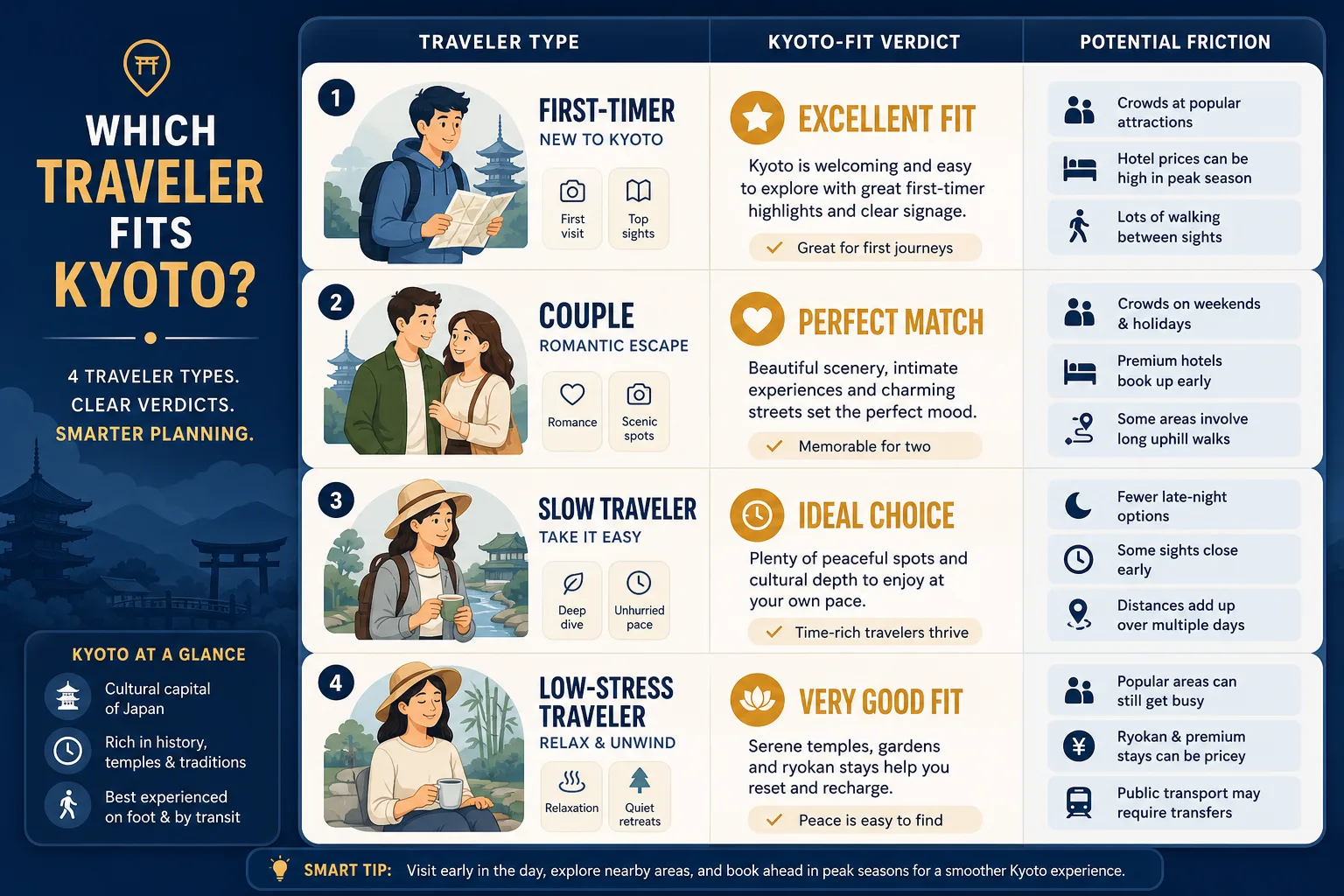
Best for First-Time Visitors
First-time visitors who prioritize comfort do well in Kyoto, but only with one mental adjustment: treat it as an atmosphere city, not a landmark city. The famous sights are real, but the comfort comes from the in-between moments. A walk from Yasaka Shrine to Kiyomizu-dera covers about 2.8 km and takes 1.5 to 2.5 hours at a relaxed pace, even though pure walking time is only around 35 minutes. That gap is the trip.
For a first-timer who wants comfort, the smart approach is one district per half-day. Higashiyama in the morning, a long lunch, a garden or a quieter temple in the afternoon. This avoids the classic first-timer mistake of pairing Arashiyama, Fushimi Inari, and central Kyoto in a single day by bus.
Best for Couples
Kyoto is one of the stronger comfort fits for couples in Japan. The city's evening atmosphere, traditional machiya stays, kaiseki dinners, and lantern-lit lanes near Gion all reward two people moving slowly together. The flat 230 yen city bus fare and the 700 yen daily bus and subway pass keep logistics simple, which matters when you do not want transit to dominate conversation.
Couples should be honest about one tradeoff. Gion is atmospheric, but some private alleys are now off-limits to tourists with fines around 10,000 yen for unauthorized entry. Stick to the public lanes, go in the early evening, and you keep the mood without the friction.
Best for Slow Travelers
This is where Kyoto is at its best. Slow travelers who measure a trip by how unhurried it felt, not how many temples they entered, get unusually high value here. A relaxed morning at Fushimi Inari at dawn, when the gates are quiet and admission is free 24 hours, is the kind of memory the city is built to produce.
The full hike up Mount Inari takes 2 to 3 hours, but slow travelers do not need to summit. Walking partway up, sitting, and turning back is often the better choice, and Kyoto rarely punishes that kind of decision.
Best for Low-Stress Travelers
Low-stress travelers who want a calm, businesslike rhythm can absolutely make Kyoto work, with two rules. First, stay near Kyoto Station or inside Higashiyama so you are not dependent on packed buses at peak hours. Second, avoid arriving during Golden Week (first week of May) or Gion Matsuri (mid-July) unless you have booked far ahead.
The friction that breaks low-stress travelers in Kyoto is almost always the same: a cheap hotel far from the sights, then three crowded bus rides a day. Paying up for location is the single biggest stress reducer.
Traveler Type Table
| Traveler type | Kyoto fit | Main friction to plan around |
|---|---|---|
| First-time visitor (comfort-led) | Strong, with one-district-per-half-day pacing | Overplanning, bus transfers |
| Couple (atmosphere-led) | Strong, especially with a machiya or higher-tier ryokan | Gion alley restrictions, peak-season pricing |
| Slow traveler | Very strong | Resisting the urge to add more sights |
| Low-stress traveler | Strong if hotel is near station or Higashiyama | Crowded buses, distant budget hotels |
| Checklist-maximizer | Weak | Crowd density, expectation mismatch |
| Pure budget traveler | Weak in peak season | Hotel rates 2 to 4 times normal, advance booking pressure |
Common Mismatches
The Kyoto comfort mismatch is usually not about disliking temples or tradition. It is about underpaying for the parts of the trip that actually create comfort.
Watch for these wrong-fit signals before you commit:
- You picked dates inside a known peak window (late March to early April, first week of May, November to early December, mid-July) and have not booked
- Your hotel is cheap but more than 15 minutes' walk from a subway station
- Your day plan assumes you can do Arashiyama, Fushimi Inari, and central Kyoto on the same day
- You expect Higashiyama to feel quiet at 2 PM on a weekend
- You are mainly going for shopping and trendy districts rather than atmosphere
Two or more checked boxes is a real signal that Kyoto, as currently planned, will not deliver the comfortable trip you want. The fix is usually pacing and hotel location, not skipping the city.
Final Match Recommendation
Kyoto is worth it for travelers who care about atmosphere and comfort, on three conditions: you start mornings early, you pay for hotel location, and you plan one main district per half-day. Under those conditions, Kyoto is among the highest-payoff cities in Japan for this traveler type.
It is not worth it, in its current form, for travelers who want bargain hotels in peak season, who refuse to shift their day earlier, or who measure trips by sight count. Those travelers tend to do better in Osaka or in a smaller regional city where the comfort gap between cheap and well-located hotels is narrower.
If you recognize yourself in the comfort-first profile and you are willing to book ahead and stay central, the answer is yes. If you recognize yourself in the checklist or deep-budget profile, the honest answer is to either change your plan or change your city.
FAQ
Is Kyoto still worth visiting given the crowds? Yes, if you plan around them. Higashiyama is nearly empty before 9 AM, Arashiyama's bamboo grove is best around 7 AM, and Fushimi Inari is open 24 hours and most peaceful at dawn. If you cannot or will not shift your day earlier, Kyoto will feel busier than the photos you saved.
How many days do I need in Kyoto for a comfortable pace? Three to four full days is the comfortable range. Two days forces back-to-back temples and packed buses. Three days lets you pair one main district per morning with a slow afternoon, which is what most comfort-seeking travelers actually came for.
Is it worth paying more for a hotel near a major station or sight? Usually yes for this traveler type. Average Kyoto hotel rates run roughly 18,000 to 25,000 yen per room per night in 2025, and two to four times that in peak weeks. A slightly higher rate near Kyoto Station, Gion, or Higashiyama often saves you bus transfers and protects the calm pace you are paying for.
Should I avoid Kyoto during cherry blossom or autumn foliage season? Not necessarily, but book 6 to 8 months ahead and expect crowds plus peak pricing. If your priority is comfort over peak scenery, late April after the blossoms or early November before peak foliage gives you most of the atmosphere with less friction.
Is Kyoto a good fit for couples who want a slower, more atmospheric trip? It is one of the strongest fits in Japan for that profile. Early-morning Higashiyama walks, a machiya stay, a kaiseki dinner, and unhurried garden visits all reward couples who treat the city as a mood rather than a checklist.