travel-decisions
Should You Use Osaka as a Base or Change Hotels During the Trip?
Decide whether to use Osaka as a single base or switch hotels across Kyoto, Nara, and Kobe, based on luggage friction, transit time, and traveler fit.
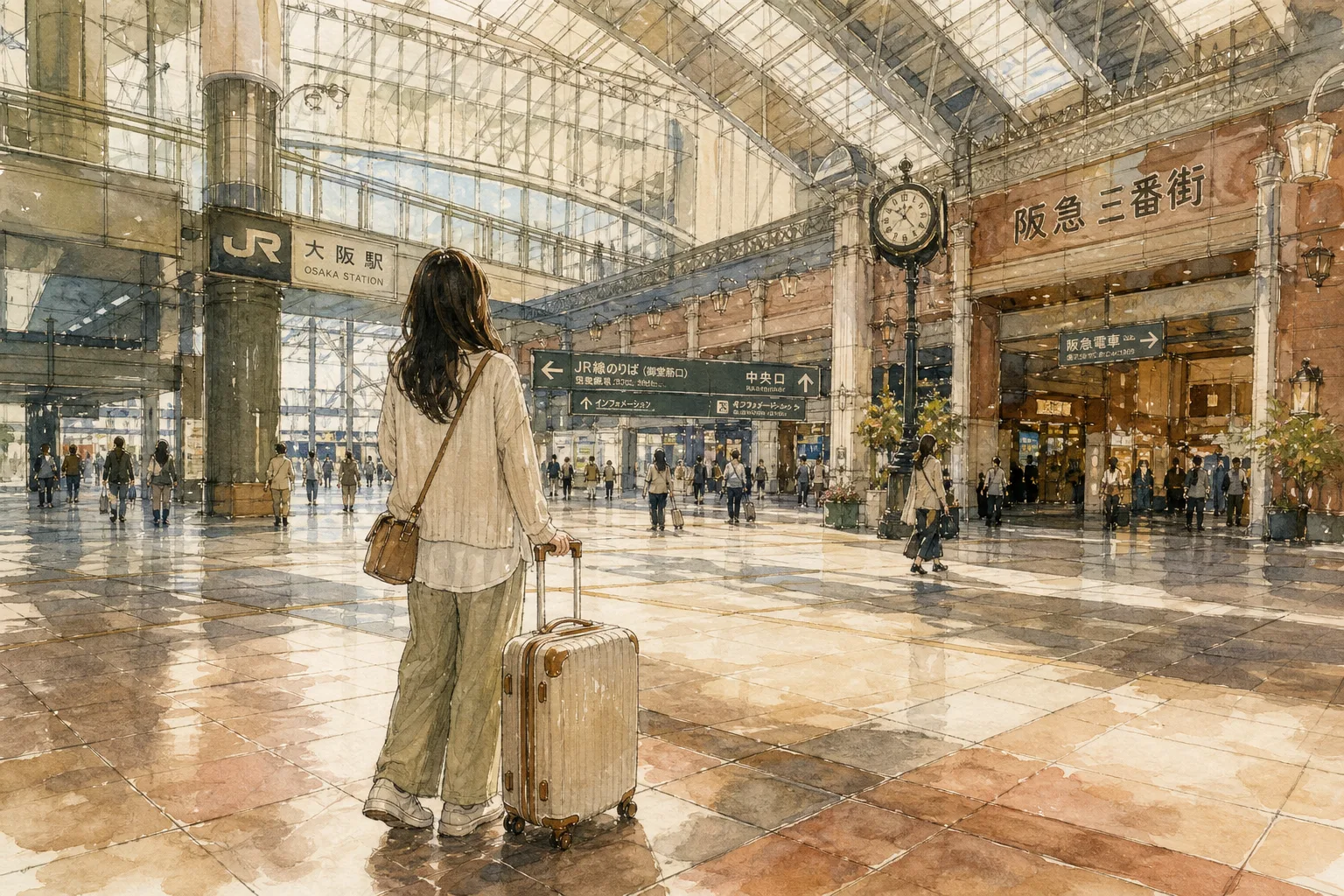
Kansai gives you a real choice that other Japan regions do not: most of the headline destinations sit within an hour of Osaka. So the question is not whether you can base in Osaka. It is whether you should, given how you travel.
Quick Verdict
Use Osaka as a single base if you are a slow traveler, a couple who values evenings together, or a low-stress planner on a 4 to 6 day trip. The trains are fast enough, and avoiding a mid-trip hotel change removes the largest single source of wasted time.
Switch hotels at least once if you want two or more full days inside Kyoto, if early-morning or late-evening atmosphere in Gion or Higashiyama matters to you, or if your trip is 7 days or longer and a second base genuinely earns its keep.
Do not switch hotels if your trip is 4 days or fewer, if you are traveling with heavy luggage, or if the idea of a morning luggage-forwarding cutoff stresses you out more than a 30-minute train ride.
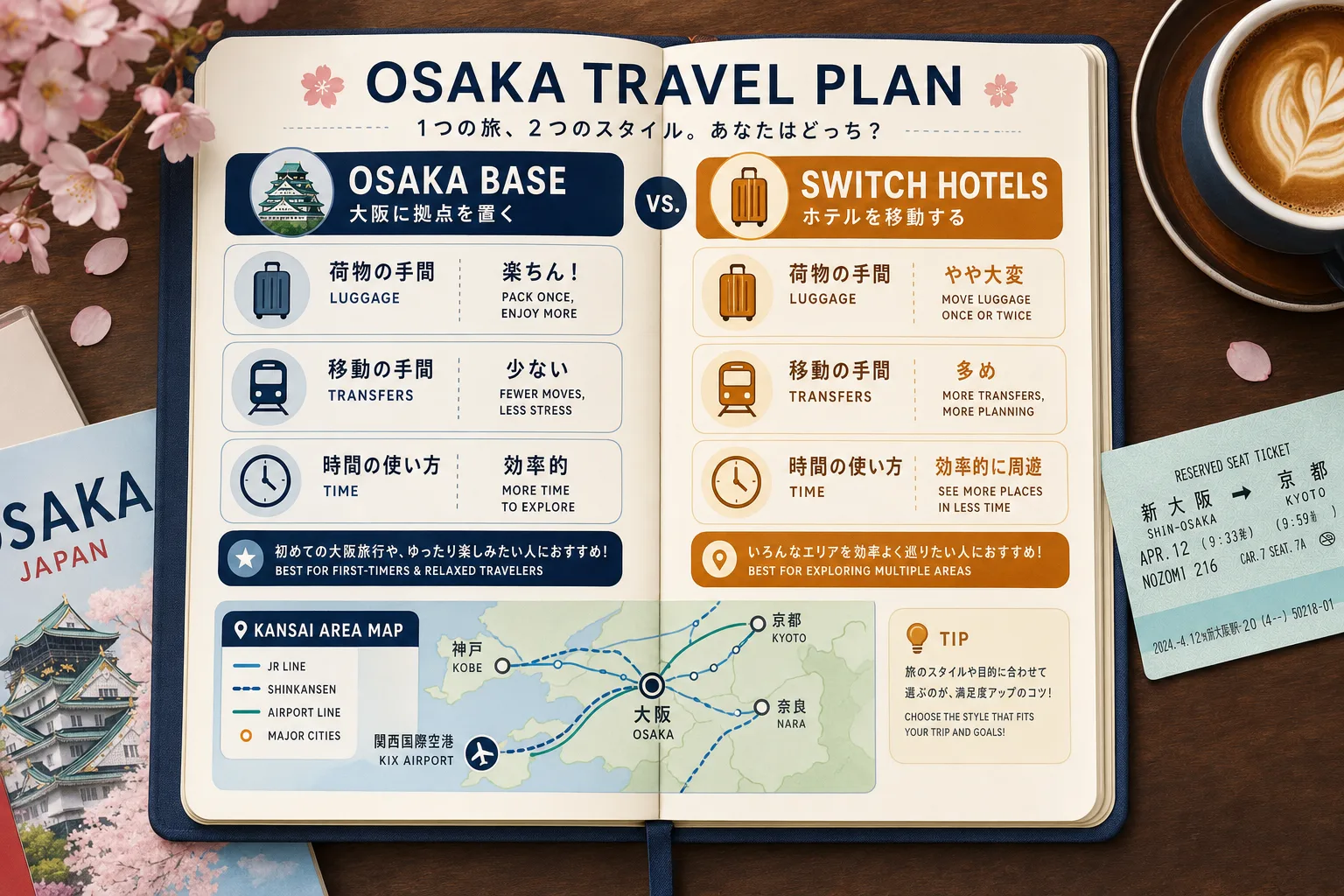
Hotel Location Risk Summary
The risk in this decision is rarely "I picked the wrong city." It is usually one of three quieter failures.
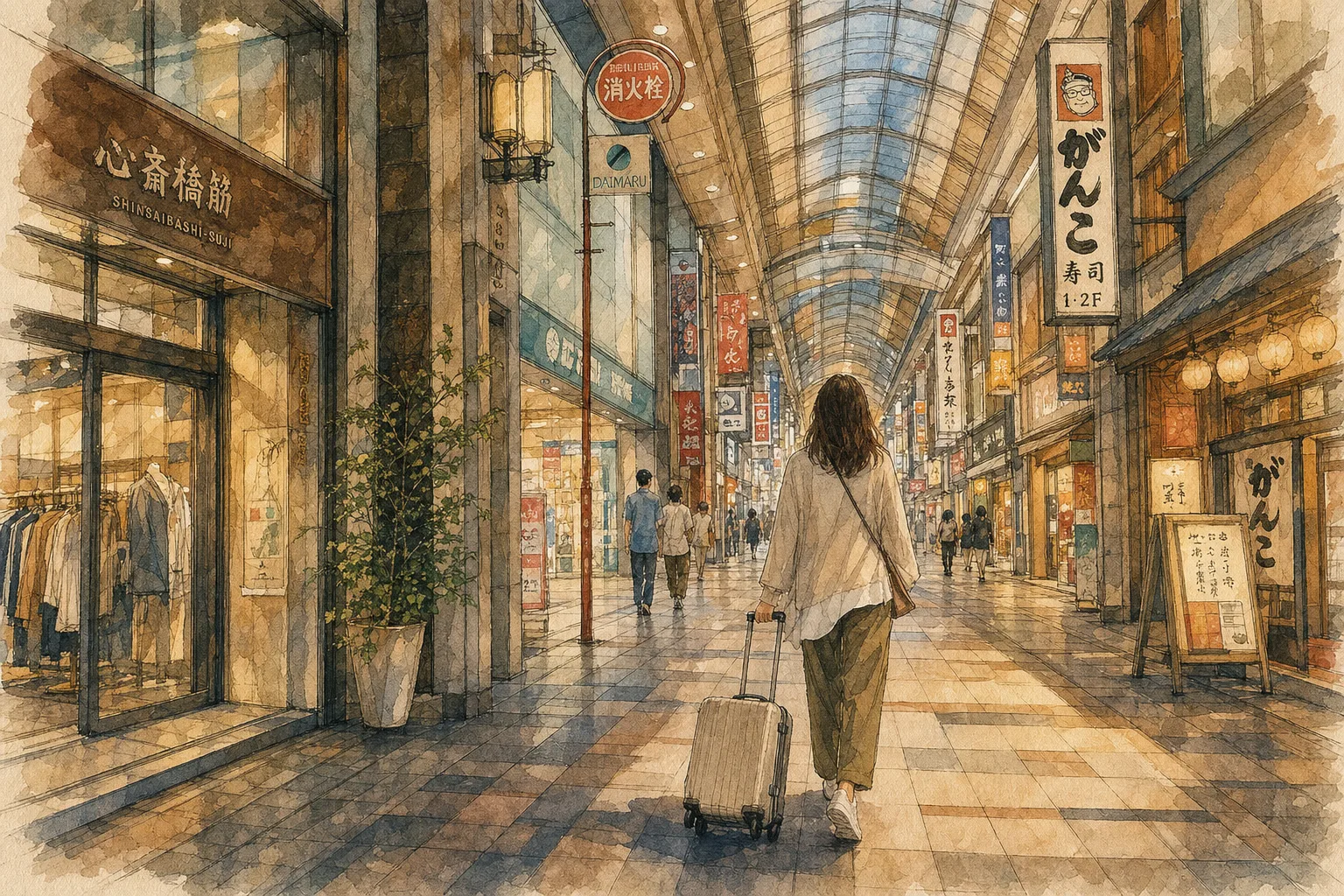
The first is luggage friction. Kyoto City restricts large suitcases on municipal buses, and most Kyoto hotels cannot store your bags before mid-afternoon check-in. Forwarding a suitcase from Osaka to Kyoto costs roughly 3,160 to 3,470 yen per piece and requires a station drop-off by late morning. That window often collides with the exact morning you wanted to sightsee.
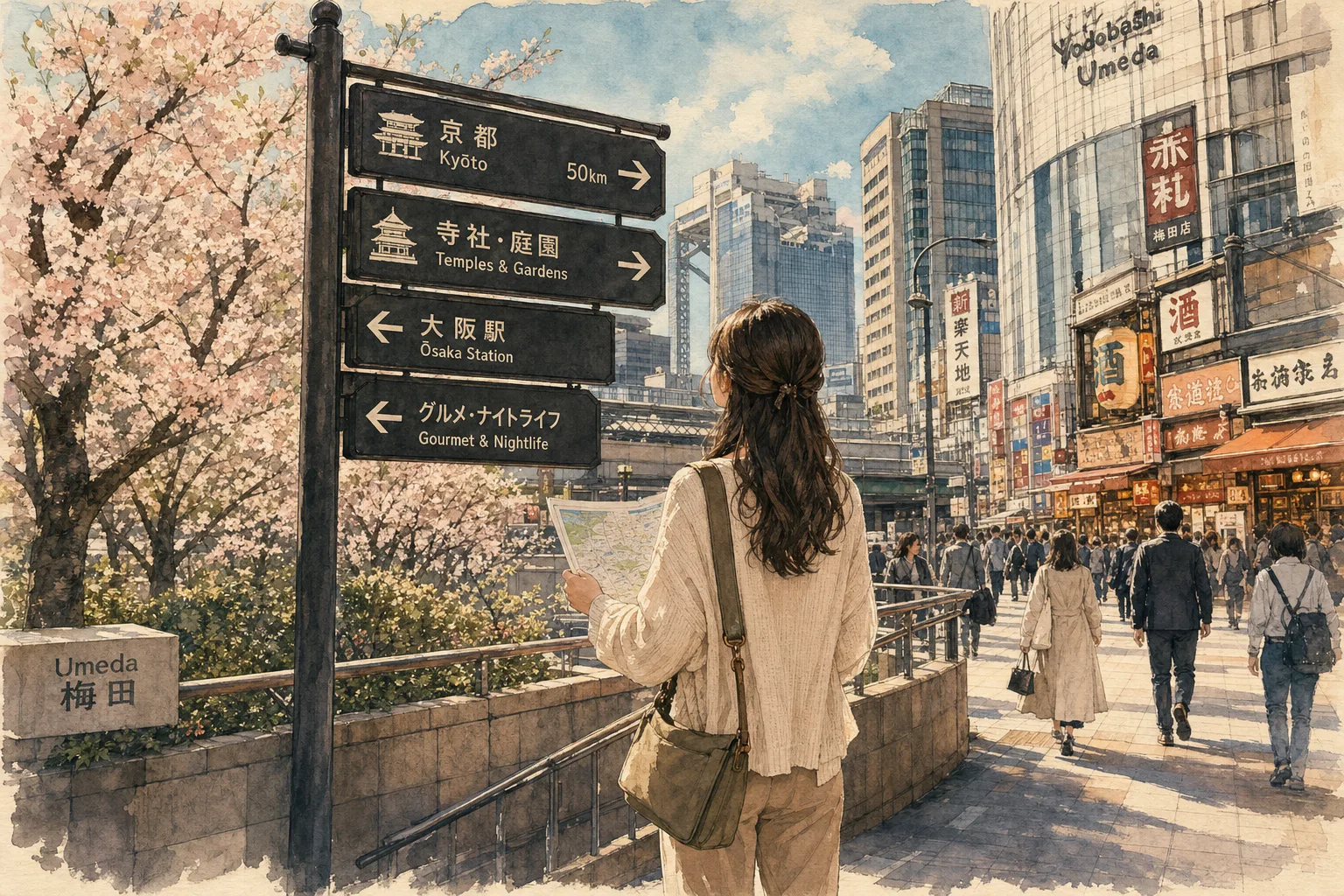
The second is transit complexity at the Umeda hub. Umeda is six interconnected stations: JR Osaka, Hankyu Osaka-Umeda, Hanshin Osaka-Umeda, and three Osaka Metro lines. If your Osaka hotel is "near Umeda" but you have not mapped which station you actually need, every day trip starts with 10 to 15 minutes of underground walking.
The third is time compression. A switch day is rarely a sightseeing day. Checkout, forwarding drop-off, transit, and waiting for the new room typically eats four to six hours, even when nothing goes wrong.
Best Areas at a Glance
| Base option | Best for | Kyoto access | Nara access | Kobe access | Main risk |
|---|---|---|---|---|---|
| Osaka (Umeda) | Day-trippers who want speed | JR 30 min / 580 yen | Needs transfer | 22 min / 410 yen | Umeda station complexity |
| Osaka (Namba) | Nara-focused trips, calmer navigation | Hankyu via transfer or JR | Kintetsu 36 min / 680 yen | Via Umeda | Less direct to Kyoto |
| Osaka + 1 Kyoto night | Slow Kyoto mornings and evenings | You are in it | 45 min via Kintetsu | 50+ min | Luggage handoff day |
| Kyoto base only | Kyoto-heavy trips, 5+ days | You are in it | 45 min | 50+ min | Higher hotel cost, weaker Osaka evenings |
| Multi-switch (Osaka, Kyoto, Kobe) | 8+ day trips, high stamina | Full days each | Day trip from any | Full day | Two full days lost to switching |
The honest read: for 4 to 6 day trips, the two strongest options are "Osaka base" and "Osaka plus one Kyoto night." Everything else asks you to pay for flexibility you may not use.
Best Area by Traveler Type
Slow travelers. Pick an Osaka base. The point of slow travel is to repeat a neighborhood until it feels familiar, and Kansai rewards that better than most Japanese regions because the day trips are short. A 30-minute train to Kyoto and a 22-minute train to Kobe mean you can do a half-day trip and still have dinner where you started.
Couples. An Osaka base usually wins, with one caveat. If a Kyoto evening (kaiseki dinner, a quiet ryokan, Gion at dusk) is central to the trip you are imagining, one night in Kyoto pays for itself emotionally. The Shinkansen from Shin-Osaka to Kyoto is 15 minutes but costs 1,450 yen or more, which is fine for one-off splurges but not as a daily commute.
Low-stress planners. Single base, no question. The cognitive load of two hotels (two check-ins, two checkouts, one forwarding window, two sets of toiletries unpacked) is the exact friction you are trying to avoid. Osaka wins because evening food access (Dotonbori, Tenma) is stronger than Kyoto's after 9 PM.
Culture-led or temple-focused travelers. This is where switching earns its keep. If your itinerary has two or more full Kyoto days, the 30-minute commute each way adds up to two hours of daylight lost. One Kyoto night reclaims those hours and lets you start at Fushimi Inari or Arashiyama before the tour buses arrive.
Areas to Be Careful With
The wrong-fit traveler pattern for an Osaka base is the person who underestimates how much they will want to do in Kyoto. They book five Osaka nights, then spend three of them commuting to Kyoto and back, arriving tired, eating convenience-store dinners, and feeling like the Osaka half of the trip never happened.
The wrong-fit pattern for switching is the person who books three different hotels for variety and discovers that variety costs them a full sightseeing day per switch. With a 5-day trip, two switches leaves you with effectively 3 days of sightseeing.
Specific disappointment risks worth naming:
- Booking a "cheap Osaka hotel near a station" that turns out to be 12 minutes walk from the actual JR or Hankyu platform you need.
- Assuming Kyoto city buses will solve last-mile transport with a suitcase. They will not; large luggage is restricted, and the bus-only day pass was discontinued in favor of a 1,100 yen subway-and-bus pass.
- Switching to Nara for a night to "experience the deer." Nara is excellent as a day trip (Kintetsu Nara Station is a 5 to 10 minute walk to Nara Park; JR Nara is 15 to 20 minutes) but thin on evening atmosphere for most travelers.
Budget vs Convenience Tradeoff
The money side of this decision is smaller than people assume. Day-trip train fares from Osaka are modest: 580 yen to Kyoto, 410 yen to Kobe, 680 yen to Nara. Three round-trip day trips total under 4,000 yen per person.
A hotel switch adds: forwarding fees (about 3,160 to 3,470 yen per suitcase one way), a Kyoto hotel night that often runs 30 to 60 percent more than an equivalent Osaka room in peak season, and the lost half-day. For two travelers with two suitcases, one switch typically costs the equivalent of two or three additional day-trip fares.
In other words, you are not really choosing on price. You are choosing on whether evenings in Kyoto are worth a logistics tax, or whether evenings in Osaka with fast day trips fit you better.
Hotel Location Checklist
Before you book, run through this list. If you cannot answer yes to most of them for your chosen base, reconsider.
- I know the exact station name (not just "Umeda" or "Namba") my hotel is closest to.
- The walk from that station's correct exit to the hotel is under 8 minutes with a suitcase.
- The station has direct access to at least one of: JR Kyoto Line, Hankyu Kyoto Line, Kintetsu Nara Line, or JR Kobe Line.
- If I am switching hotels, I have confirmed the luggage forwarding morning cutoff (between 10:00 and 11:30 AM) and budgeted around 3,160 to 3,470 yen per bag.
- If I am switching, my switch day is a half-sightseeing day, not a full one.
- My trip is long enough that the second base gets two or more nights, not one.
- I have not assumed Kyoto buses will move my luggage; they restrict large suitcases.
- My evening priorities (food street, atmosphere, quiet) match the base I picked, not just its daytime convenience.
Final Recommendation
Choose a single Osaka base if you are on a 4 to 6 day Kansai trip, travel at a moderate or slow pace, dislike packing more than once, and are happy treating Kyoto, Nara, and Kobe as day trips. Pick Umeda for speed to Kyoto and Kobe, or Namba for a calmer hub and direct Nara access.
Choose Osaka plus one Kyoto night if Kyoto's atmosphere (early temple mornings, Gion in the evening, a ryokan night) is non-negotiable, or if you have 7+ days and at least two full Kyoto-focused days.
Do not multi-switch across three or more hotels unless your trip is 8 days or longer and your stamina is high. The math almost never works on shorter trips.
If you are still unsure, default to the single Osaka base. Regret from "I should have moved to Kyoto for a night" is smaller and cheaper to fix mid-trip than regret from "I spent two of my five days checking in and out of hotels."
FAQ
Is Osaka a good base for a 5-day Kansai trip? Yes, for most low-stress and slow travelers. JR Osaka to Kyoto is about 30 minutes for 580 yen, Osaka to Kobe is 22 minutes for 410 yen, and Osaka-Namba to Kintetsu Nara is about 36 minutes for 680 yen. Day trips are short enough that returning to the same hotel each night does not cost you meaningful sightseeing time.
When does it actually pay to switch hotels to Kyoto? When you want two or more full Kyoto days, when early-morning temples or late-evening Gion are part of why you came, or when the daily commute would push your sightseeing window below five usable hours. One Kyoto night reclaims roughly two hours of daylight per Kyoto day.
How bad is the luggage problem if I switch hotels? Manageable but not free. Same-day forwarding from Osaka to a Kyoto hotel runs about 3,160 to 3,470 yen per standard suitcase, and you must drop bags by a morning cutoff between 10:00 and 11:30 AM. Kyoto city buses also restrict large suitcases.
Should I stay in Umeda or Namba if Osaka is my base? Umeda gives you the fastest JR and Hankyu access to Kyoto and Kobe, but it is a six-station hub that can overwhelm first-timers. Namba is calmer to navigate and connects directly to Nara via Kintetsu. Choose by which day trip you prioritize.