travel-decisions
Is Summer the Wrong Time for Tokyo If You Hate Heat, Crowds, and Station Stress?
For travelers who hate humidity, packed trains, and long station walks, Tokyo in summer is usually the wrong call. Here is when the tradeoff is still worth it.
If you hate humidity, full trains, and long station walks, you are not imagining it: Tokyo in summer punishes exactly those things. The question is not whether summer is uncomfortable. It is whether the discomfort is worth what you actually came for.
Quick Verdict
For most crowd-sensitive travelers, Tokyo in summer is the wrong choice. The heat, humidity, and station friction compound across the day and shrink how much you actually enjoy what you came to see.
- Choose summer Tokyo if: you are locked into July or August dates (work, school, flight credits), you specifically want Sumida fireworks or a named matsuri, or you tolerate humid heat well and value lower hotel rates in some weeks.
- Avoid summer Tokyo if: you wilt in humidity, dislike packed rush-hour trains, get tired from long underground transfers, or want a relaxed first-time Tokyo trip where the city itself is the appeal.
- If you can shift dates: late October through early December, or mid-March through mid-April, will give you a noticeably easier trip with similar sightseeing access.
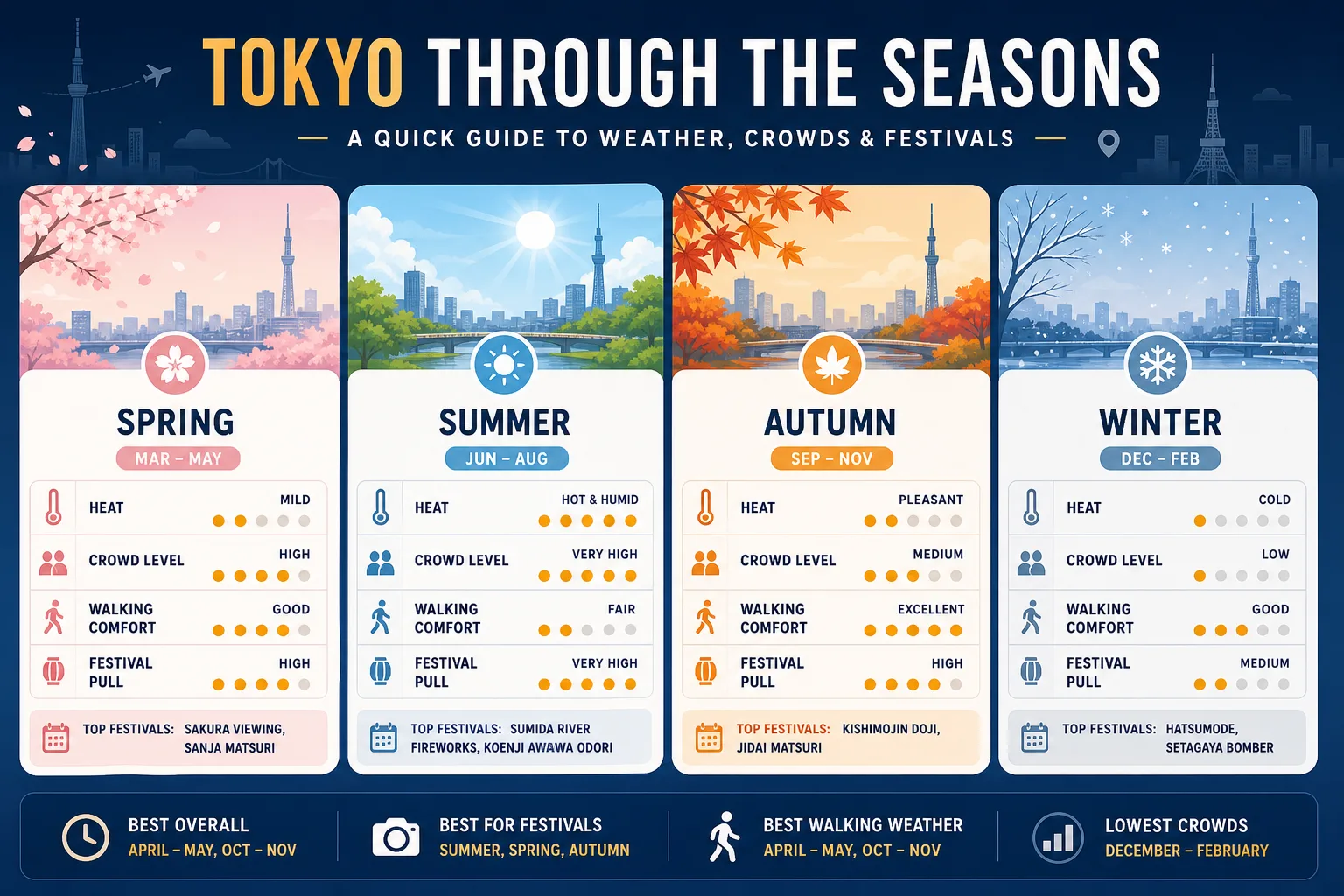 An infographic comparing Tokyo's seasons across heat, crowds, walking comfort, and festival activity.
The Real Friction Is Not Just Heat
People warn about Tokyo heat and stop there. The actual problem for crowd-sensitive travelers is that four frictions stack on the same day.
Heat and humidity. Daytime highs from late June to early September often sit at 30 to 35C with 70 to 85 percent humidity. You sweat through clothing within ten minutes of leaving an air-conditioned space. Energy drops faster than you expect, which shortens how many stops you can realistically do.
Crowded trains and stations. Tokyo trains are crowded year-round on weekday mornings and evenings, but in summer the heat turns minor crowding into a strong sensory load. Platforms are hot, transfer tunnels are warm, and even off-peak trains feel denser when everyone is damp.
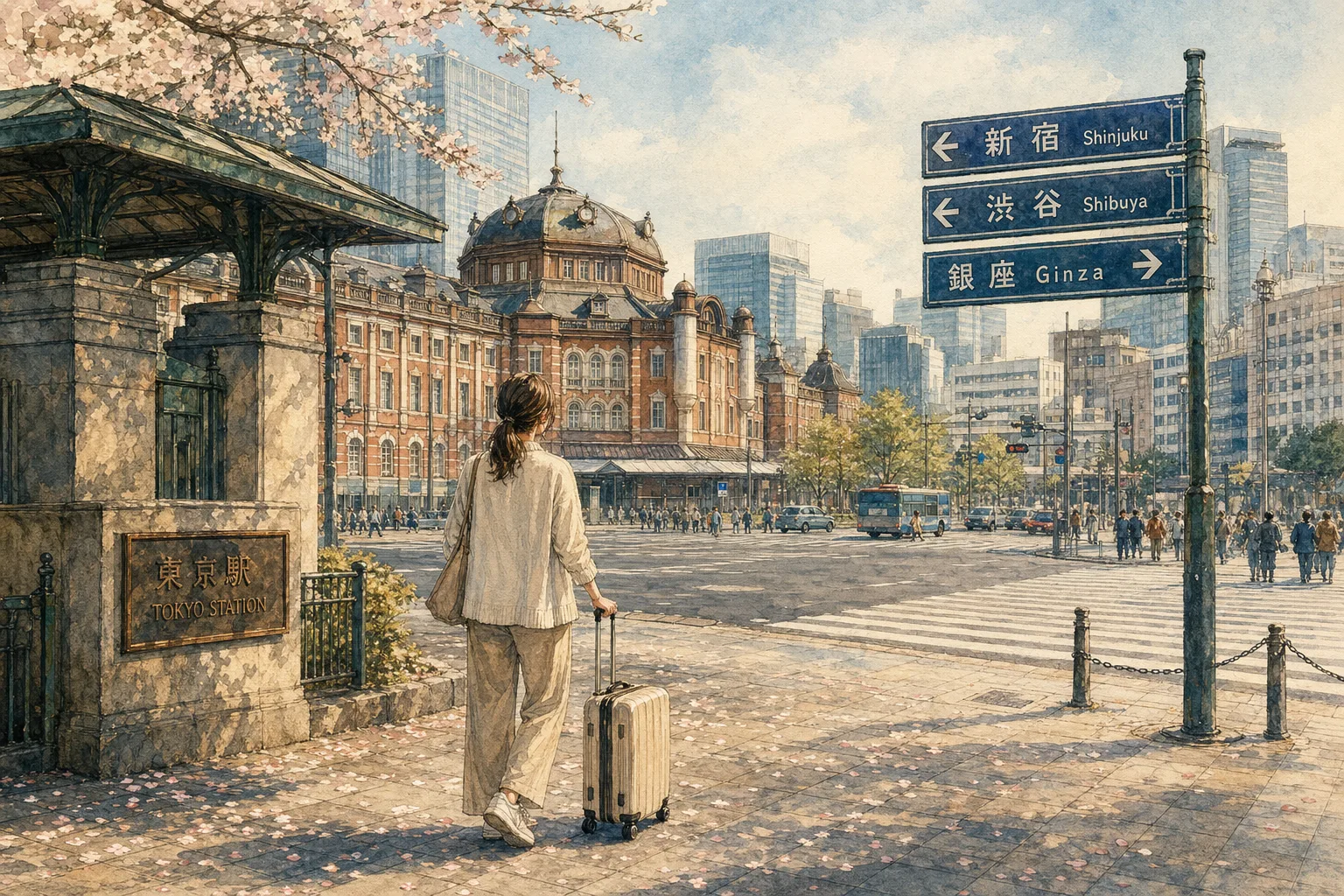
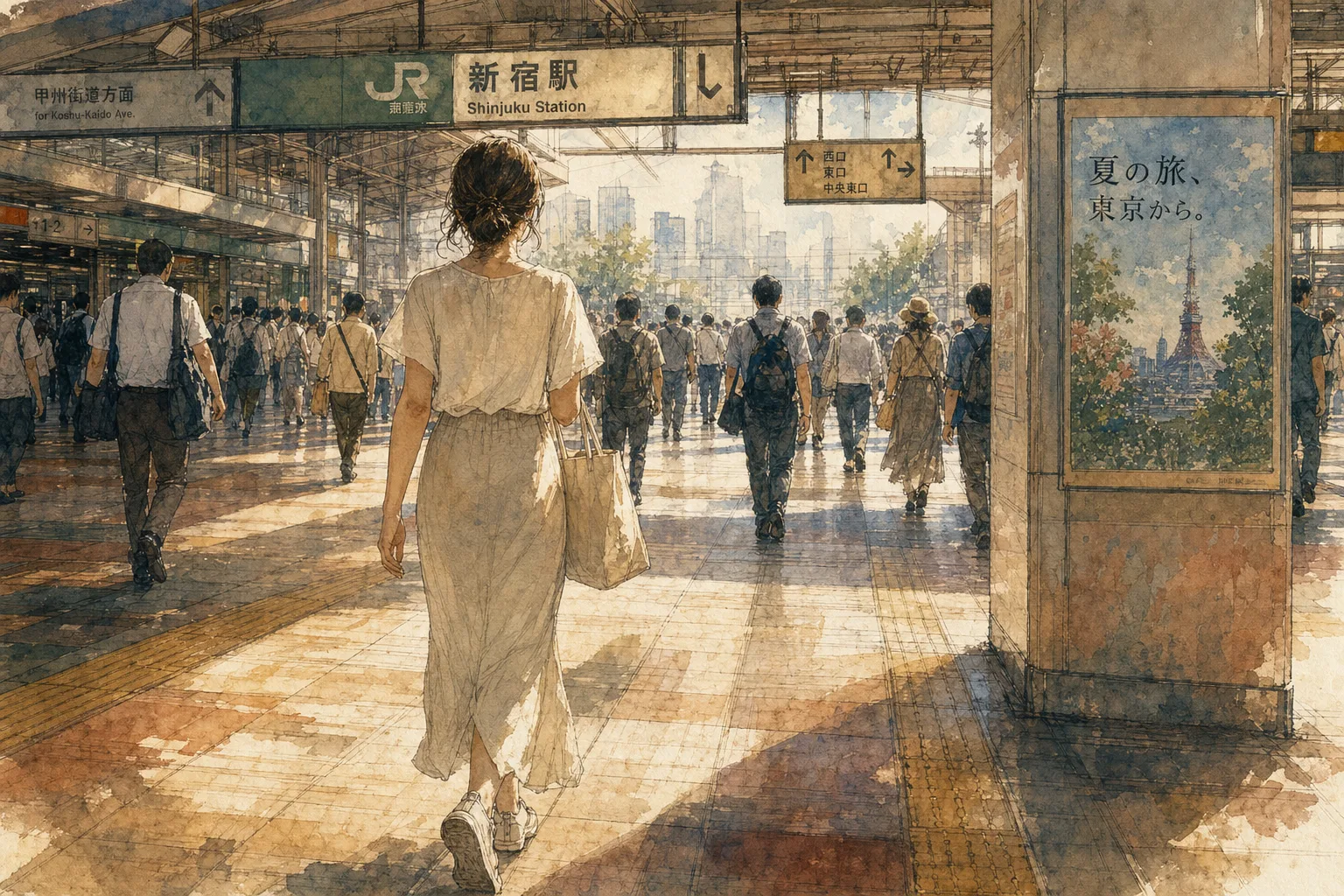
Walking fatigue. Stations like Shinjuku, Tokyo, Shibuya, and Otemachi involve long underground walks just to change lines or reach the right exit. In comfortable weather this is fine. In summer it becomes the part of the day you start dreading by day three.
Festival-season tradeoffs. Summer is matsuri season, which is genuinely special. But festivals add another layer of density to neighborhoods that were already going to be hot and busy. If festivals are not why you booked, you are paying the crowd cost without the upside.
Friction Table: Tokyo by Season for Crowd-Sensitive Travelers
This is the comparison that actually matters for this decision. Sightseeing access is roughly equal across seasons; the difference is how hard the day feels.
| Season | Heat / Humidity | Train and Station Crowding | Walking Comfort | Festival Pull | Net for Crowd-Sensitive Travelers |
|---|---|---|---|---|---|
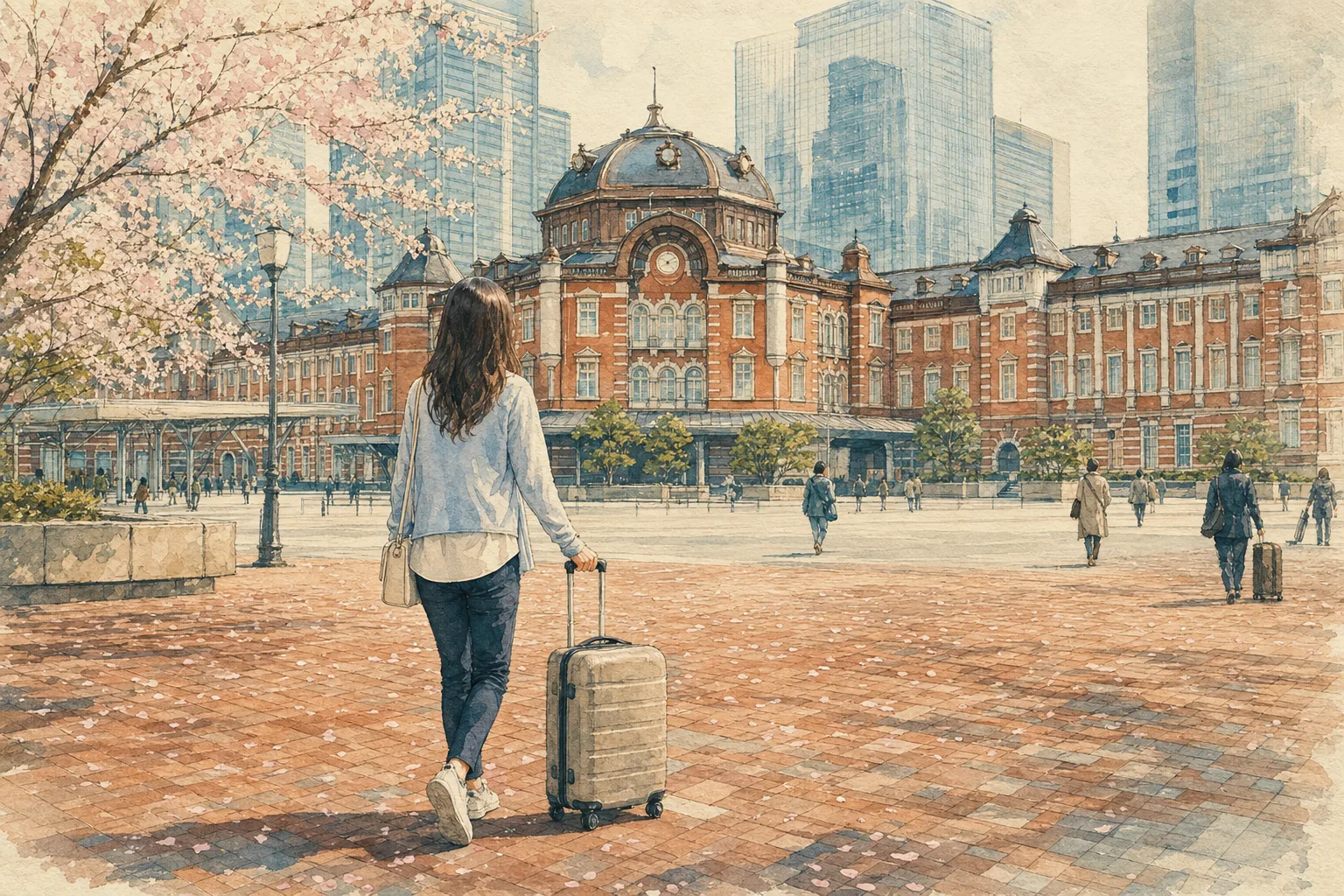
| Late spring (late Mar to mid Apr) | Mild, comfortable | High (cherry blossom peak) | Very good | Hanami, not summer matsuri | Good, but very crowded sights |
| Early summer (Jun) | Warm, humid, rainy season | Moderate | Wet but cool indoors | Low | Mixed; rain is the main friction |
| Peak summer (mid Jul to mid Aug) | Hot and very humid | High, plus Obon week | Tiring | Strong (fireworks, matsuri) | Worst for this reader |
| Late summer (late Aug to early Sep) | Still hot, slightly less humid | Moderate | Tiring | Tail end of festivals | Slightly better, still hard |
| Autumn (mid Oct to early Dec) | Cool, dry | Moderate | Excellent | Low to moderate | Best overall for this reader |
| Winter (Jan to Feb) | Cold, dry, clear | Lower outside holidays | Good if you dress for it | Low | Strong alternative, fewer crowds |
If you only remember one row: autumn is the season that minimizes every friction listed in your brief.
Who Will Feel Summer Tokyo the Most
Not every traveler experiences this the same way. You will feel summer hardest if you match more than one of these:
- You live somewhere temperate and rarely deal with 80 percent humidity.
- You get sensory fatigue in crowds before you get physically tired.
- You plan dense itineraries (four or more neighborhoods a day).
- You are traveling with kids, older parents, or anyone who needs frequent breaks.
- You want to walk a lot rather than taxi between stops.
You will feel it less if you tolerate humid climates, build slow days, use taxis freely, or are visiting specifically for one or two festival nights and accept the rest of the trip as background.
How to Reduce the Friction If You Are Going Anyway
If your dates are fixed, do not try to power through. Restructure the trip.
- Reshape the day around heat. Outdoor sights before 10am, indoor or underground from 11am to 4pm, outdoor neighborhoods again after sunset. This single change protects more of your trip than any other tactic.
- Pick a hotel that shortens station pain. Staying within a five-minute walk of a major station (not a fifteen-minute walk through a hot neighborhood) is worth paying more for in summer specifically.
- Avoid weekday rush hours hard. 7:30 to 9:30am and 5:30 to 7:30pm on weekdays are the worst combination of crowd and heat. Plan transfers outside these windows.
- Cut your daily stop count by a third. What you would do in three stops in October takes four hours longer in August. Accept it in advance instead of mid-trip.
- Use taxis without guilt for short hops. A 1,500 yen taxi that saves a long underground transfer in 33C heat is not a luxury; it is the trip working.
- Pre-book indoor anchors. TeamLab, a museum, a department store food hall, a long lunch. These become the spine of the day, not extras.
- Hydrate and carry a small towel. Every convenience store sells cold drinks and sweat towels. Locals use them. Use them too.
Better Alternatives If Summer Is Optional
If your dates are flexible at all, these are the seasons that actually solve the problem instead of managing it.
- Late October to early December. Cool, dry, clear skies, manageable crowds outside specific weekend leaf-viewing spots. This is the strongest answer for a low-friction Tokyo trip.
- Mid-March to early April (but not cherry blossom peak week). The two weeks before peak hanami can be mild and pleasant without the worst crowding.
- Mid-January to mid-February. Cold but very dry, the lowest tourist density of the year outside New Year week, and indoor Tokyo (food, shopping, museums) is at its best.
- Stay shorter in summer, longer elsewhere. If you must touch Tokyo in summer for a specific reason, three or four nights is far easier than seven. Spend the rest of the trip somewhere cooler like Hokkaido or higher-elevation areas.
Decision Checklist Before You Book
Run through this before you commit to summer dates.
- I have a specific reason summer is the only option (work calendar, school, a named festival, locked flight).
- I have honestly judged my own tolerance for 32C and high humidity, not my hopeful version.
- My itinerary has fewer than four stops per day, with indoor anchors built in.
- My hotel is within a five-minute walk of a major station.
- I have budgeted for taxis as a normal expense, not a backup.
- I know which weeks (Obon, mid-July to mid-August) are worst and have avoided them if possible.
- If I removed the festival from the trip, I would still want to go this month. If not, I am rethinking the dates.
If you cannot check most of these, summer is probably the wrong window for this specific trip.
FAQ
Is Tokyo in summer really that bad, or is it overhyped? The heat and humidity are not overhyped. Tokyo summer regularly sits around 30 to 35C with high humidity from late June through early September, and the friction stacks: hot platforms, packed trains, long underground walks. If you tolerate humid heat well, it is manageable. If you do not, it is the season that will dominate your trip mood.
Which weeks of summer are the worst for crowd-sensitive travelers? Mid-July through mid-August tends to be the toughest window. School holidays in Japan, Obon travel in mid-August, and peak humidity all overlap. Early June (still rainy season) and the first half of September are usually softer on crowds but can still be very humid.
Are summer festivals worth pushing through the discomfort? Only if a specific festival is the reason you booked the trip. Sumida River Fireworks, Mitama Matsuri, or a neighborhood Bon Odori can be memorable, but they add more crowd density on top of an already crowded season. If you would not cross the world specifically for that event, summer is rarely the right call.
If I cannot change my dates, what is the single biggest thing that helps? Restructure the day around heat, not sights. Outdoor sightseeing before 10am, indoor or underground areas (museums, department stores, large stations like Tokyo Station or Shibuya Scramble Square) from late morning to late afternoon, and outdoor neighborhoods again after sunset. This one change does more than any gadget.