travel-decisions
Is Tokyo Too Tiring for Low-Walking Travelers?
A friction-first look at whether Tokyo works for low-walking, lower-stamina travelers, with the station traps, hilly wards, and pace fixes that decide the trip.
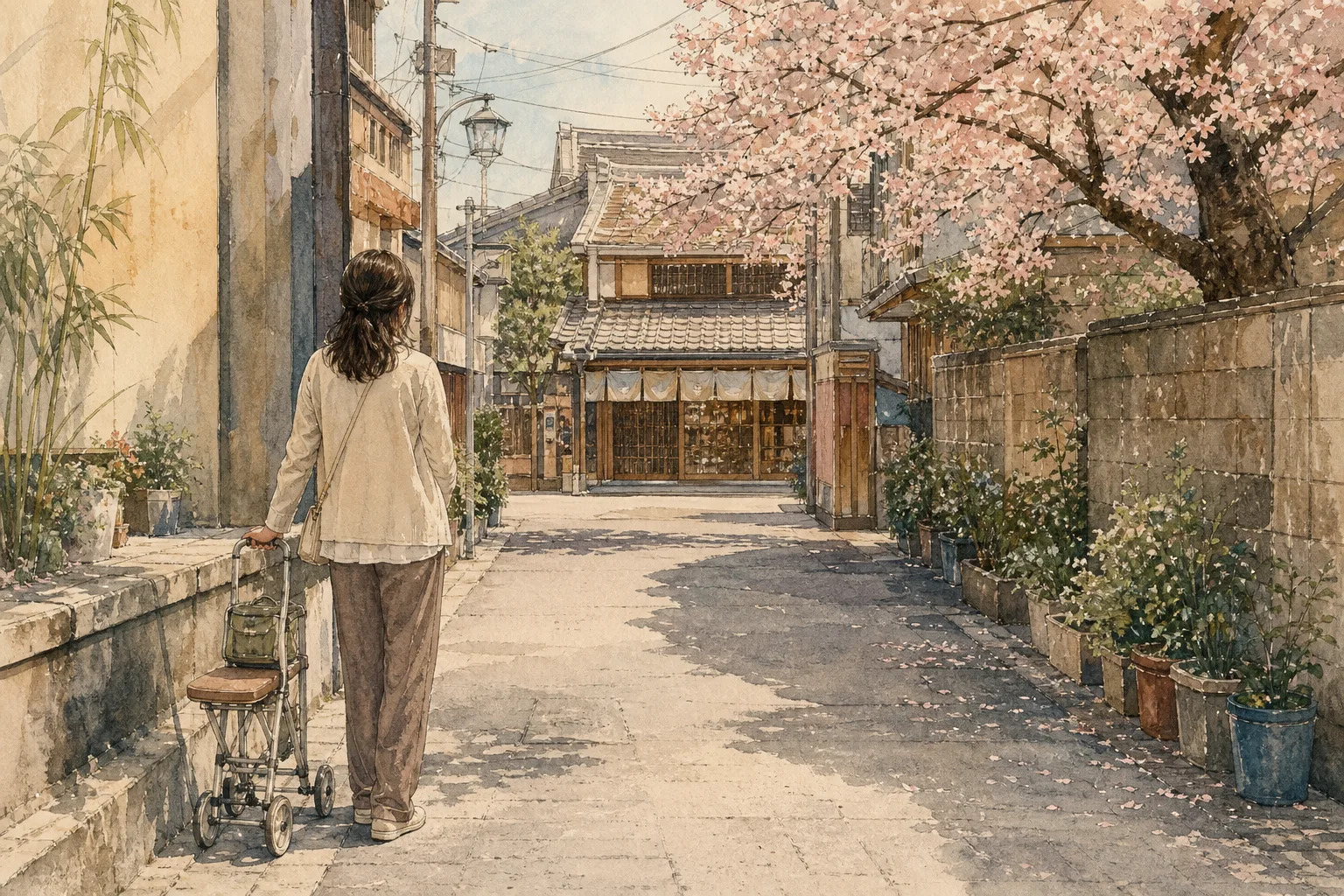
Tokyo is a walker's city by default. Trains move you between districts, but the actual sightseeing, eating, and shopping happens on foot, often through long station corridors and crowded sidewalks. For travelers with limited stamina, sore knees, or low tolerance for crowd pressure, that default pace is the real problem, not the city itself.
This guide treats the friction first. If you can shape the trip around it, Tokyo works. If you cannot, you should know that before you book.
Quick Verdict
Tokyo is a strong fit if you are a low-walking traveler who is willing to:
- Base in a flat ward (Asakusa, Ginza, or a quiet pocket of Marunouchi).
- Cap sightseeing at one neighborhood per day.
- Use taxis freely between wards instead of forcing long station transfers.
- Accept that you will skip some famous spots.
Tokyo is a weak fit if you:
- Expect to "see Tokyo" in three or four packed days.
- Want Shibuya, Shinjuku, Roppongi, and Tokyo Station all in one trip on foot.
- Cannot stand on a moving train for 10 to 15 minutes.
- Need a bench every 10 minutes; public seating is genuinely scarce here.
If you are in the second group, a smaller Japanese city or a slower regional trip will give you more of Japan for less physical cost.
The Real Friction Is Not Distance, It Is Stacking
Most low-walking travelers can handle a single 20 minute walk. Tokyo rarely asks for one walk. It asks for a stack:
- Walk from hotel to station entrance.
- Walk through the station to the correct platform.
- Stand on the train.
- Walk through transfer corridors.
- Walk from the destination exit to the actual sight.
- Walk the sight itself.
- Repeat in reverse.
A single sightseeing run can easily total 60 to 90 minutes of walking before you have seen anything. The fatigue is cumulative, and four specific frictions drive it:
- Walking fatigue. Sidewalks are flat in some wards and steeply sloped in others. Minato Ward (Roppongi, Akasaka, Azabu) and parts of Shibuya around Spain-zaka and Dogenzaka are hilly enough to matter. Asakusa and Ginza are flat.
- Stairs and long corridors. Subway stations guarantee a barrier-free path, but the elevator route often forces you to a different exit and a longer surface walk. Some lines sit very deep; the Sobu Rapid Line platforms at Tokyo Station are at B5.
- Crowd pressure. Up to 2,500 people can cross Shibuya Scramble Crossing in a single light change at peak times. That is not a sightseeing experience for someone who needs space and footing.
- Transit stress. Transfers can be much longer than the map suggests. Keiyo Line to the main JR or Shinkansen platforms at Tokyo Station is about 900 meters and 15 to 20 minutes on foot. The Seibu-Shinjuku Line to the main Shinjuku Station or the expressway bus terminal is a 15 minute outdoor walk. Ginza Line to Hanzomon or Fukutoshin at Shibuya averages 8 to 10 minutes.
If you do not plan for the stack, Tokyo wins day one and you spend day two in the hotel.
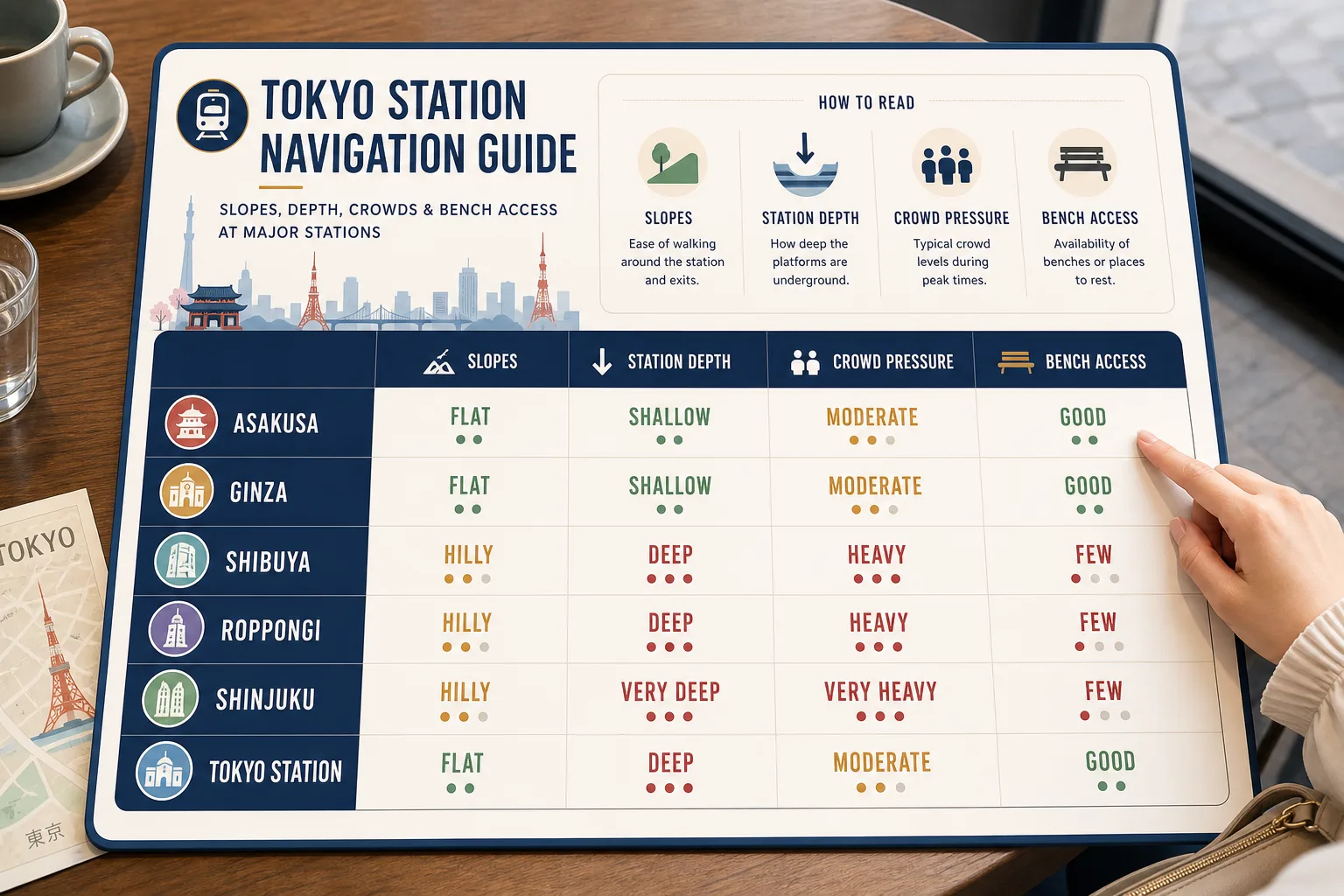
Friction Table: Where Tokyo Hurts and Where It Does Not
This is the ward-and-station view a low-walking traveler actually needs.
| Area / Station | Slopes | Station depth and transfers | Crowd pressure | Notes for low-walking travelers |
|---|---|---|---|---|
| Asakusa | Flat | Shallow, simple | Heavy at Senso-ji, calm in side streets | Best base for low stamina. Short loops, traditional food nearby. |
| Ginza | Flat | Moderate, multiple lines but well-signed | Heavy on weekends | Easy walking, dense dining, taxis plentiful. |
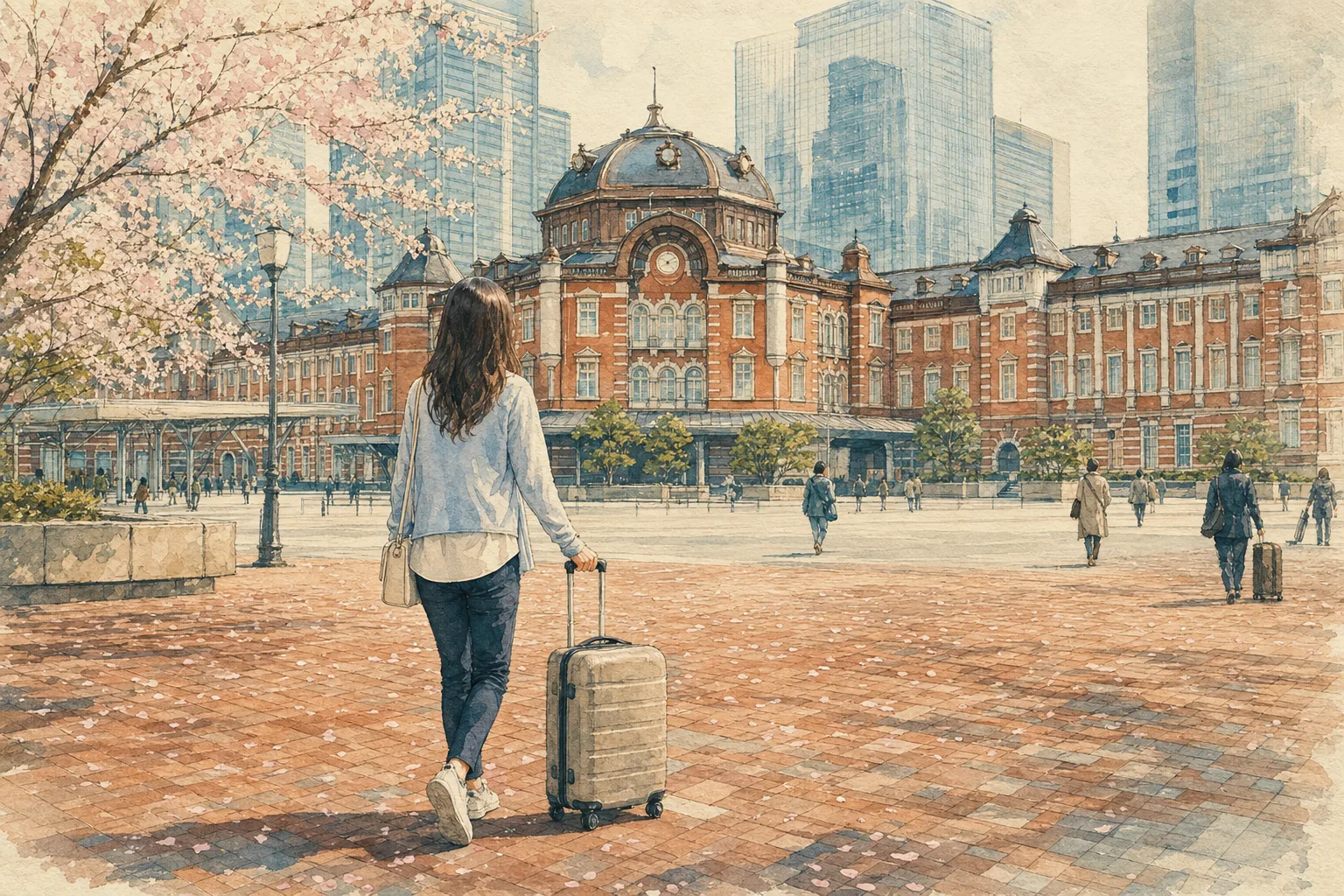
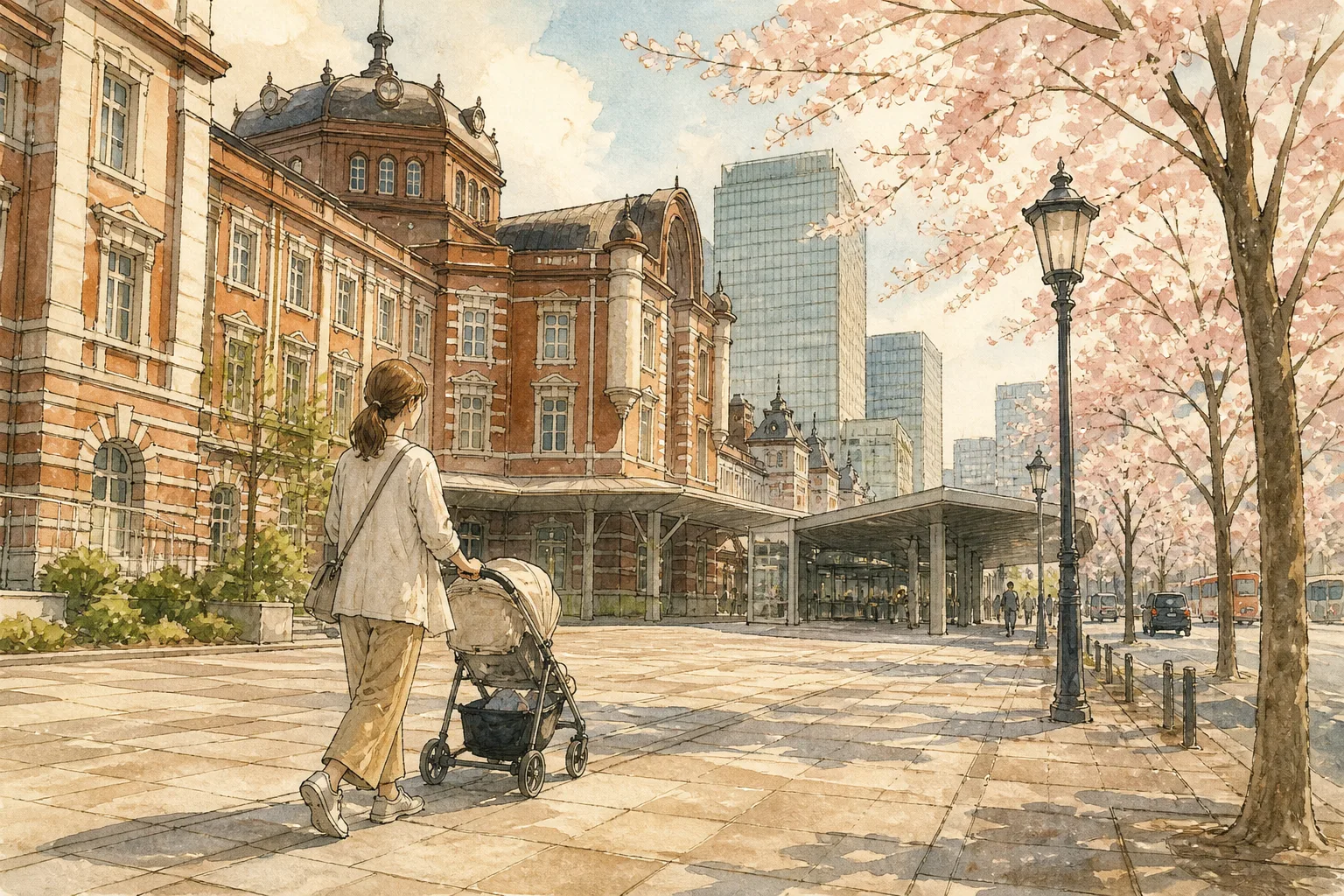
| Marunouchi (Tokyo Station area) | Flat | Very complex; Keiyo Line transfer is roughly 900 m, Sobu Rapid at B5 | Heavy at rush hour | Good for hotels, hard for transfers. Avoid Keiyo Line connections. |
| Shibuya | Hilly (Spain-zaka, Dogenzaka) | Ginza Line to Hanzomon or Fukutoshin averages 8 to 10 min on foot | Very heavy; Scramble peaks near 2,500 people per light | Visit briefly, by taxi, off-peak if possible. |
| Shinjuku | Mixed | Seibu-Shinjuku to main Shinjuku is a 15 min outdoor walk | Very heavy | Pick one exit and stick to it. Do not plan cross-station transfers. |
| Roppongi / Akasaka / Azabu | Heavily sloped | Moderate | Moderate | Use taxis between sights, not feet. |
Two extra costs worth pricing in:
- Seating is scarce. Public benches on streets, inside most station areas outside select platforms, and in many parks are limited. Cafes become your rest stops, which means budgeting cafe stops into the day.
- Luggage drag is real. If you connect via Shinkansen, oversized bags add stress. Luggage with total dimensions between 160 cm and 250 cm needs a free advance reservation on the Tokaido, Sanyo, and Kyushu Shinkansen, with a 1,000 yen penalty if you skip it. Anything over 250 cm total is not allowed at all. Pack smaller than you think.
Who Will Feel This Most
Tokyo's friction does not hit everyone equally. You should take the warning seriously if you match two or more of these:
- You tire noticeably after 30 to 45 minutes of continuous walking.
- You have knee, hip, ankle, or lower-back issues that flare with stairs.
- You feel anxious in dense crowds or struggle to keep footing when jostled.
- You travel with a companion who walks at a different pace and will not slow down.
- You are arriving jet-lagged with a tight itinerary and no buffer day.
- You are pulling a large suitcase between hotels mid-trip.
Older travelers and slow travelers can absolutely enjoy Tokyo. The risk is the combination of low stamina with a first-timer itinerary that tries to cover Shibuya, Shinjuku, Asakusa, Akihabara, and a day trip in four days. That itinerary is what breaks the trip, not Tokyo itself.
How to Reduce the Friction
These are the changes that actually move the needle.
Base choice
- Stay in Asakusa or Ginza, not Shibuya or Shinjuku.
- Pick a hotel within 5 minutes flat walking of your station exit, not just "near" the station.
- Confirm the hotel has an elevator from the lobby to your floor, and from street level to the lobby.
Daily structure
- One ward per day. Not one ward per morning.
- Build in a sit-down lunch of at least 60 minutes as a rest, not a refuel.
- End sightseeing by 4 PM. Evenings are for dinner near the hotel.
Transit choices
- Skip the Keiyo Line transfer at Tokyo Station. If you arrive via Disney area trains, taxi the last leg.
- At Shibuya, avoid the Ginza to Hanzomon or Fukutoshin transfer; surface and taxi instead.
- Use taxis between wards, not within them. A 10 minute taxi often replaces 25 minutes of station walking.
- If you must use Shinjuku, pick one exit at the start of the day and return to that same exit.
Crowd avoidance
- Senso-ji before 9 AM, Shibuya Scramble before 10 AM or after 9 PM, and only if you actually want to see it.
- Avoid Shibuya Station area street drinking zones in the evening; Shibuya Ward enforces a permanent outdoor drinking ban near the station daily from 6 PM to 5 AM, which signals how rowdy that pocket gets.
Body management
- Carry a small folding stool or rolling cane-seat. Benches will not be there when you need them.
- Plan two cafe stops per day as scheduled rest, not just when you feel tired. Cafes are Tokyo's public seating.
- Use a small folding stool or rolling cane-seat for moments when benches do not appear.
FAQ
Is Tokyo actually walkable for someone who tires after 30 to 40 minutes? Only if you redesign the day. Tokyo sightseeing is built around long station corridors and neighborhood walking loops, so a 30 to 40 minute stamina ceiling means one main area per day, taxis between wards, and flat neighborhoods like Asakusa or Ginza instead of hilly Roppongi or Shibuya.
Are Tokyo subway stations wheelchair and low-mobility friendly? Tokyo Metro and Toei Subway stations guarantee at least one barrier-free path from street level to platforms using an elevator, ramp, or stairlift. The catch is that the accessible route often uses a different exit than the one signposted for your destination, so you may walk longer above ground to save stairs below.
Which Tokyo neighborhoods are easiest on the legs? Asakusa and Ginza are flat and have shorter walking distances between sights, shops, and food. Minato Ward areas like Roppongi, Akasaka, and Azabu are heavily sloped, and parts of Shibuya around Spain-zaka and Dogenzaka involve real hills. Choose a flat ward as your base and visit hilly ones in short, taxi-assisted bursts.
Is Tokyo Station itself a problem for low-walking travelers? Yes, and it is worth planning around. Transferring from the JR Keiyo Line to other major JR lines or Shinkansen platforms inside Tokyo Station requires roughly a 900 meter walk that takes 15 to 20 minutes, and the Sobu Rapid Line platforms sit deep underground at the B5 level. Allow extra time, or pick a different transfer station.
Would a quieter Japanese city be a better fit than Tokyo? Often yes. Kanazawa, Takamatsu, and Matsumoto offer compact centers, fewer mega-stations, and lighter crowds. Kyoto is mixed because it is flatter than Tokyo but very crowded in core districts, and tourists who enter private alleys in the Gion district face a 10,000 yen fine, so calm does not mean rule-free.