travel-decisions
Who Might Regret Osaka First If They Came to Japan Mainly for Temples, Shrines, and Gardens?
If your first Japan trip is about temples, shrines, and gardens, basing in Osaka can create expectation mismatch and time pressure. Use this decision guide to avoid regret, weigh Osaka vs Kyoto by vibe and commute, and learn the fixes if you still choose Osaka.
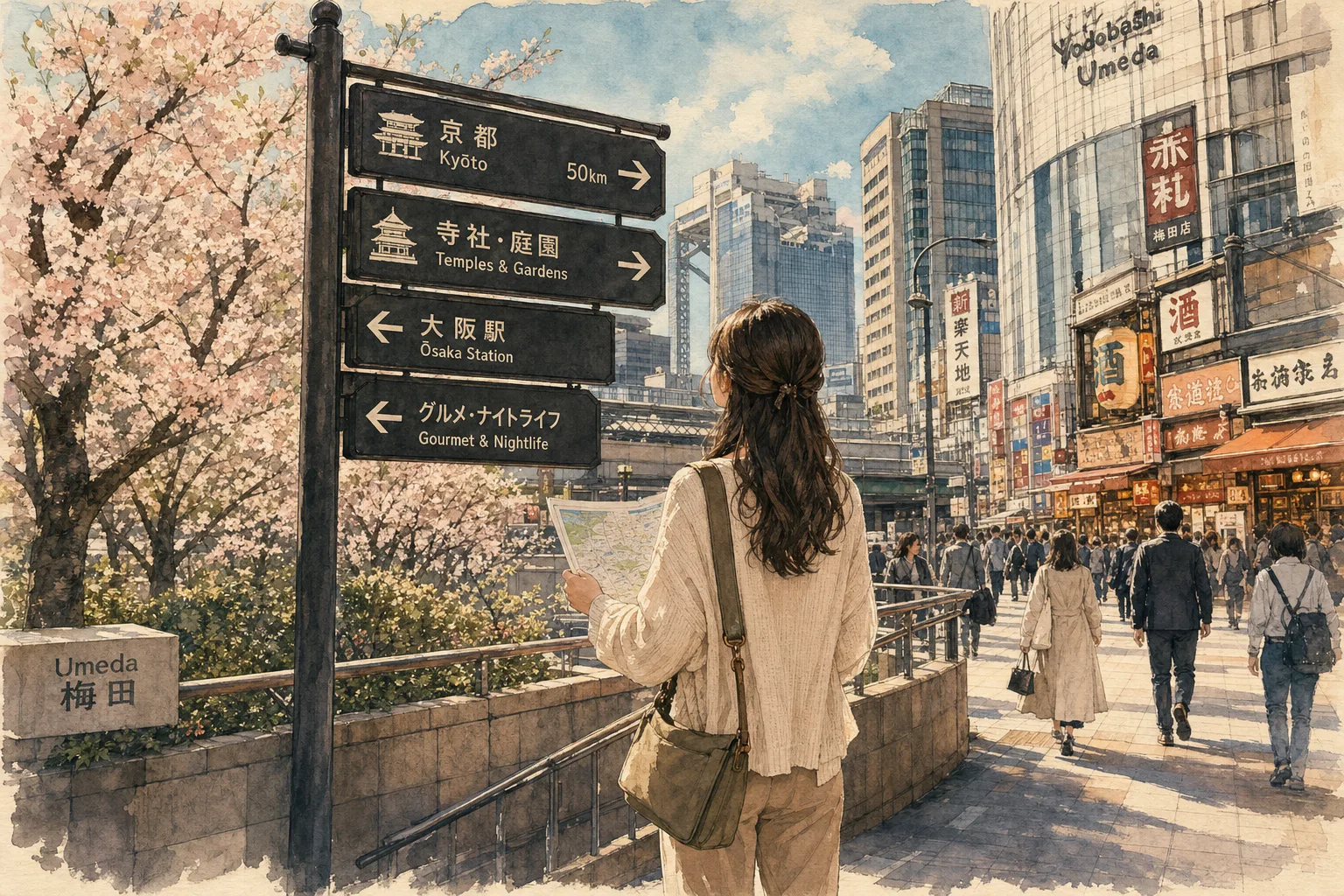
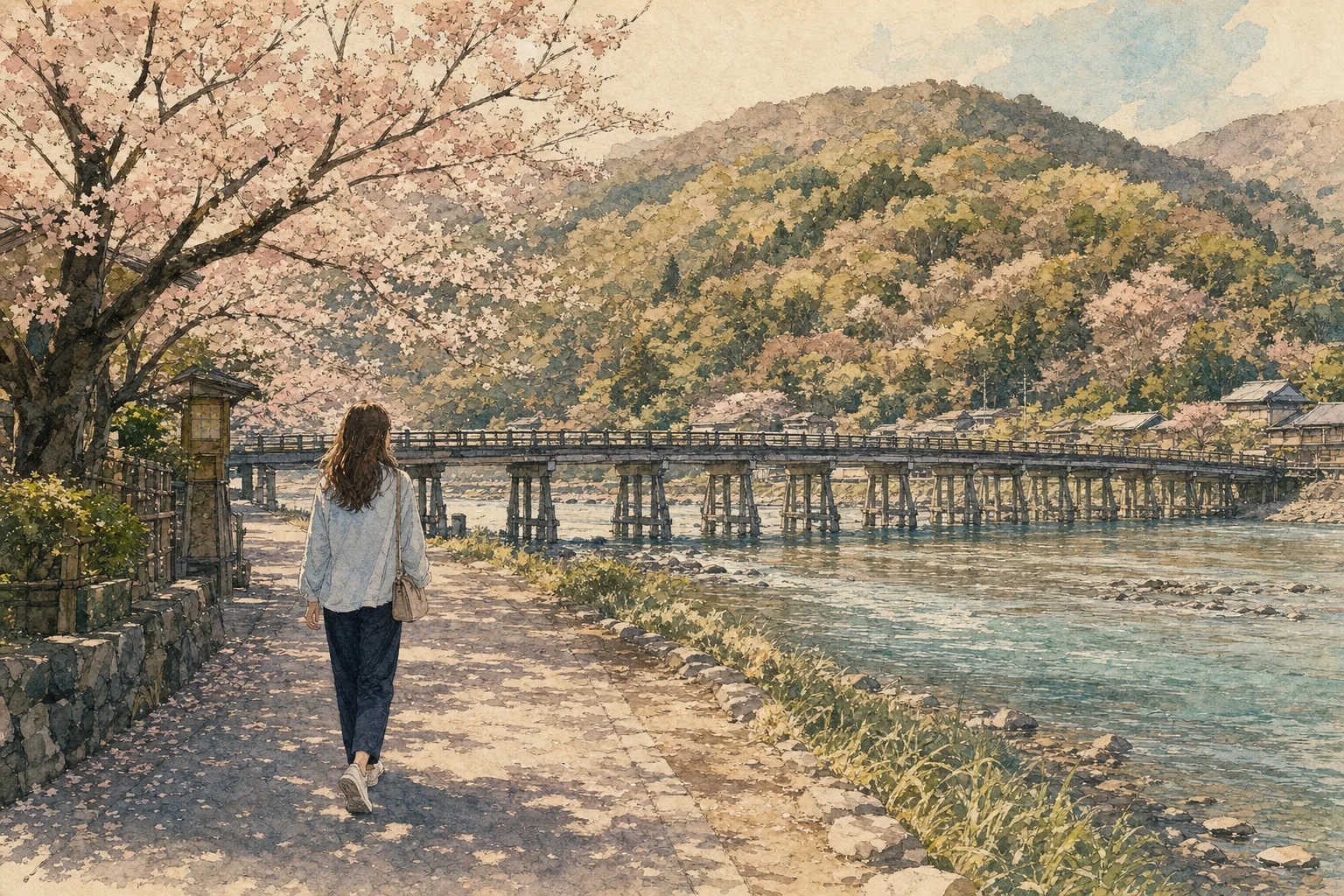
If you came to Japan primarily for temples, shrines, and gardens, your base city will decide how your days actually feel. Osaka shines for food and neon energy. Kyoto concentrates premodern religious sites and contemplative gardens.
Quick Verdict
-
Choose Osaka first if:
- Food, markets, and nightlife are your top joys, and temples are a side quest.
- You can dedicate full days to Kyoto and accept a daily round-trip train time cost.
- You like late-evening city buzz more than dawn quiet at temple gates.
-
Do not choose Osaka first if:
- Your must-have moments are dawn light in temple grounds, hushed gardens, and wooden architecture.
- You have only 2 to 3 full days and want most of them in temples and gardens.
- You would be disappointed that key Osaka heritage spots feel reconstructed. For example, most current structures at Osaka's Shitenno-ji were rebuilt in the 1960s and 1970s using ferroconcrete, which reads modern to many visitors.
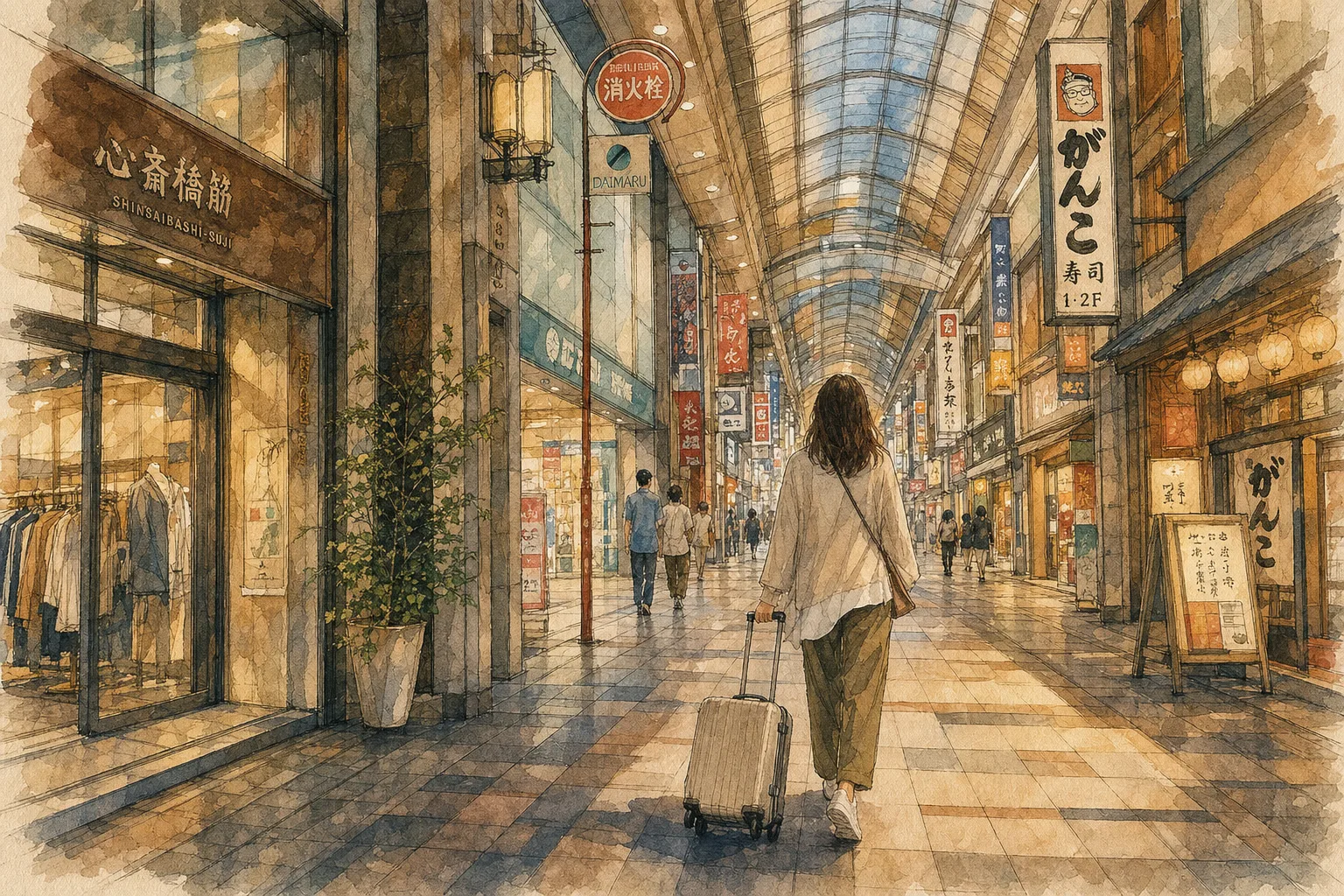
Kyoto concentrates over 1,600 Buddhist temples and 400 Shinto shrines. Osaka is a modern culinary metropolis with districts like Dotonbori, Shinsaibashi, and Umeda focused on street food and nightlife. If your heart says old stone, wood, and moss, basing in Osaka first can be a mismatch.
Main Friction Problem
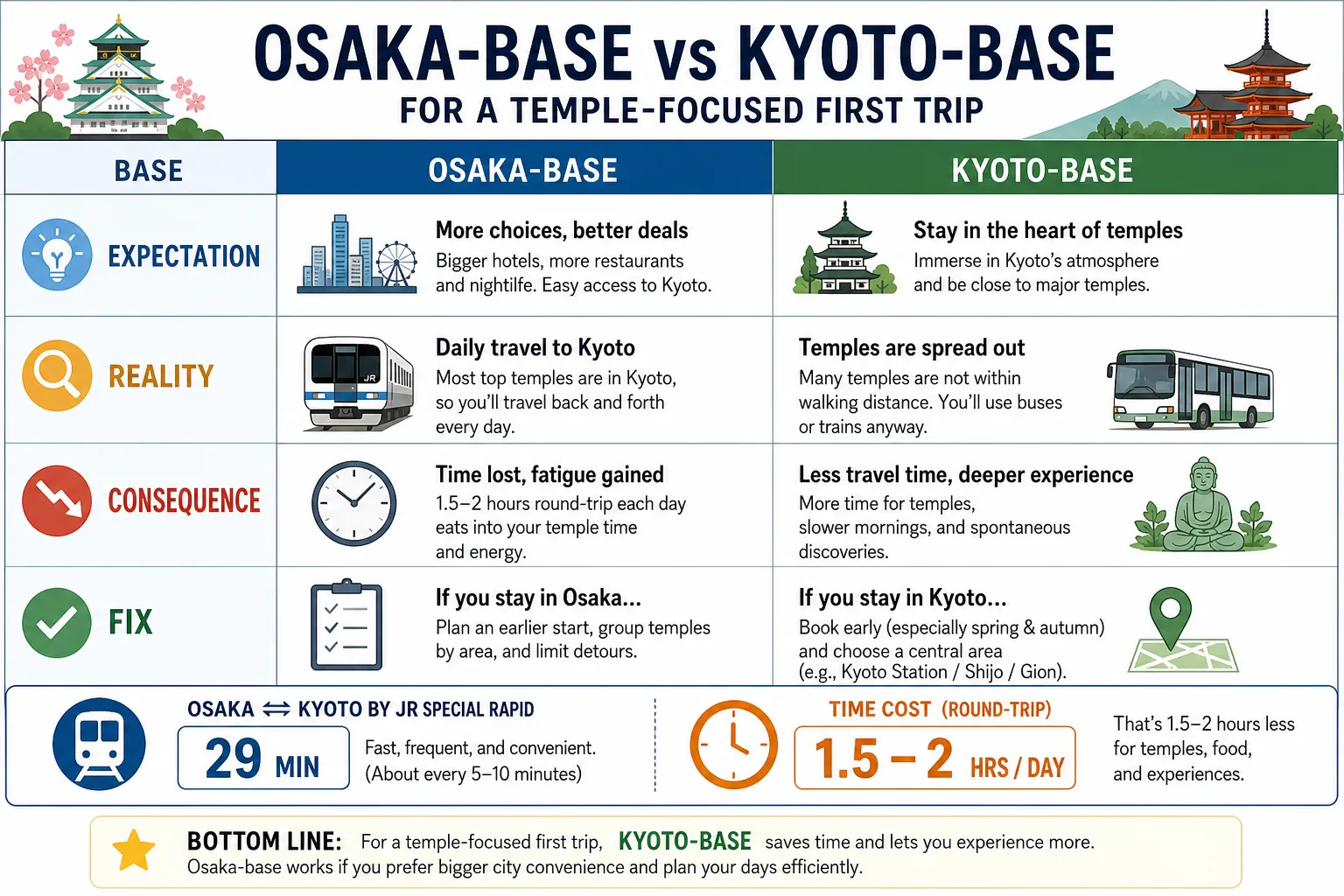
Two frictions create regret for temple-first travelers who pick Osaka as base:
-
Expectation mismatch
- You picture a calm, historic city. Osaka is kinetic, vertical, and food-forward. Its signature districts skew bright and commercial. Many visitors expecting a temple town feel let down by the vibe and by reconstructed religious sites.
-
Time pressure
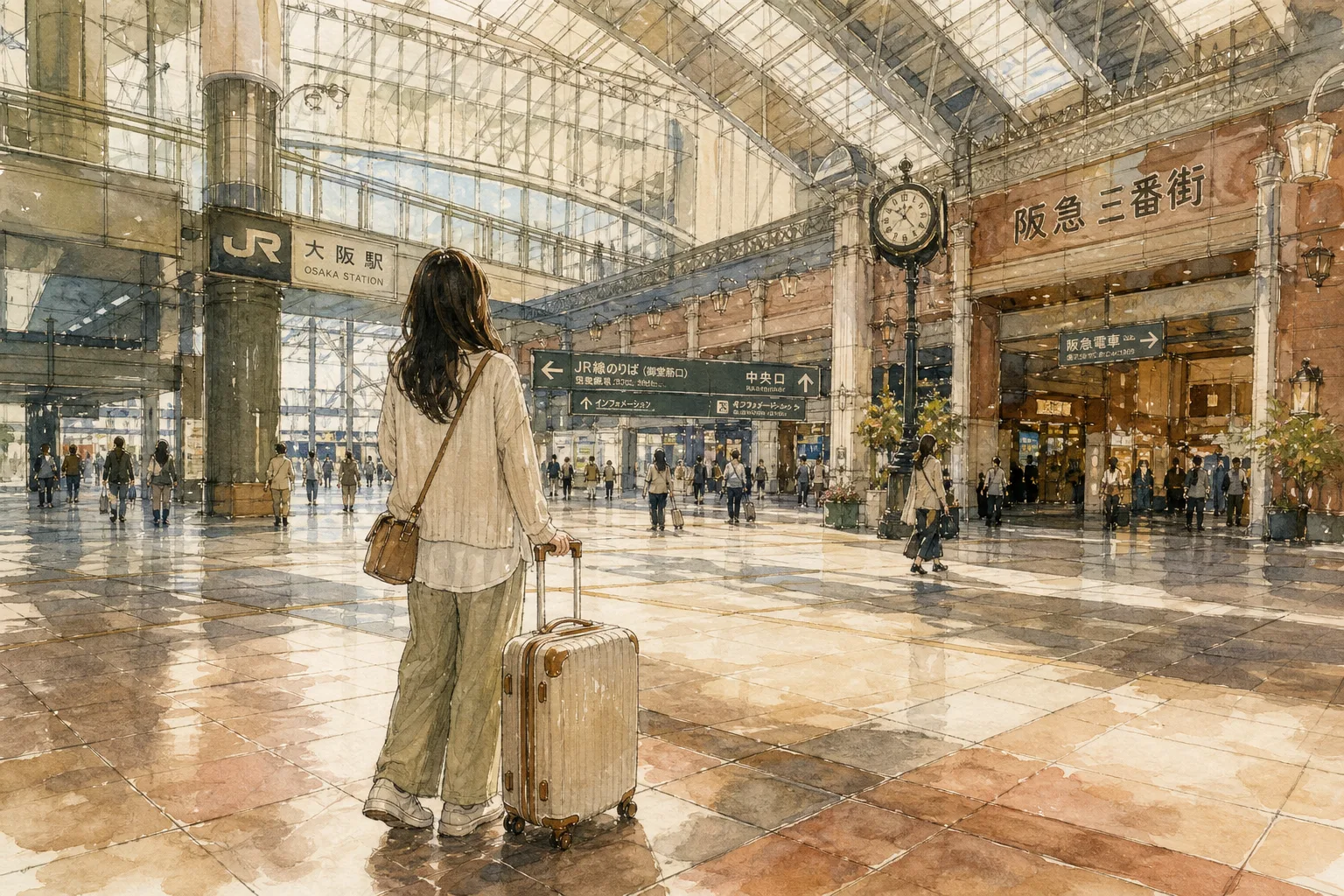
- Kyoto is close on a map, but the daily cost is real. JR Special Rapid connects JR Osaka to JR Kyoto in 29 minutes for 580 yen one way; Hankyu Limited Express connects Umeda to Kyoto-Kawaramachi in about 43 to 44 minutes for 410 yen one way. Add station walks, transfers, and you are at 1.5 to 2 hours of train travel round-trip from an Osaka hotel to Kyoto's temples on a typical day. Early closings and golden-hour goals then compress your schedule.
Friction Table
The point is not generic facts. It is how the day actually plays out.
| Decision variable | Expectation | Reality from Osaka base | Consequence | What to change |
|---|---|---|---|---|
| City vibe | Quiet temple town | Neon, markets, and vertical shopping in central Osaka | Mood clash if you want serenity first | Base in Kyoto or plan Kyoto overnights |
| Morning access | At temple gates by first light | Station walks and a 29 to 44 min intercity ride before Kyoto transit | You miss the emptiest hour | Sleep in Kyoto for that one key morning |
| Day compression | 6 to 8 calm hours in gardens | 1.5 to 2 hrs spent on trains round-trip | Fewer sites, rushed pace | Cluster Kyoto areas; do one focused day, not half-days |
| Authentic feel | Ancient wood and patina | Shitenno-ji's main precincts are 1960s-70s ferroconcrete rebuilds | Some visitors feel it looks modern | Prioritize Kyoto and Nara for premodern textures |
| Cost logic | Save money by staying in Osaka | Commute cost/time stacks; Kyoto hotels may carry a higher tax at the luxury tier | Savings may be smaller than expected | Do a split stay to capture Kyoto value on non-luxury nights |
Who Will Feel It Most
- Temple seeker aiming for dawn or blue-hour photos.
- History-led traveler sensitive to reconstruction vs original materials.
- First-timer with only 2 to 3 full days, wanting most time in Kyoto precincts.
- Low-stamina or slow-travel style that dislikes rushed transfers.
- Travelers who find neon, crowds, and street food energy draining on a temple-focused week.
If that is you, Osaka first is likely to feel like the wrong soundtrack for your trip.
How to Reduce the Friction
If you still want Osaka as your base for food and evenings:
- Anchor near JR Osaka Station or Osaka-Umeda to shorten overhead. Use JR for 29-minute runs to JR Kyoto or Hankyu for about 43 to 44 minutes to Kyoto-Kawaramachi depending on where you start your Kyoto day.
- Do full Kyoto days, not fragments. A round-trip commute typically eats 1.5 to 2 hours. Make it count.
- Start early. Be on one of the first intercity trains, then begin in the district you plan to explore all day to avoid backtracking.
- Use Kyoto's Subway & Bus 1-Day Pass (1,100 yen) if it fits your route. Note that the old flat-rate municipal 1-day bus pass was discontinued.
- Do not bring large suitcases onto Kyoto municipal buses. Use luggage delivery or taxis when relocating.
- For one special morning or evening, sleep in Kyoto. It is the cleanest way to capture the empty-hour magic.
- In Osaka, pick your most resonant heritage corners:
- Shitenno-ji: Inner precinct 300 yen, Gokuraku-jodo Garden 300 yen, Treasure House 500 yen. Know that the 1960s-70s ferroconcrete rebuild reads different from old timber.
- Sumiyoshi Taisha: Calm Shinto grounds when you need a breather from city energy.
Better Alternatives
- Base in Kyoto if temples, shrines, and gardens are your main course. You will trade a bit of Osaka nightlife for more serene mornings. Note: Kyoto implemented a tiered municipal accommodation tax increase on March 1, 2026, reaching up to 10,000 yen per person, per night for high-end luxury stays. Budget and midrange travelers are affected less, but factor it in.
- Split stay: 1 to 2 nights in Kyoto to capture dawn and evening in the districts you care about, then move to Osaka for food-first nights. Respect Kyoto's rules: tourists are banned from private residential alleyways in Gion with fines up to 10,000 yen for unauthorized entry or photography.
- Overnight in Nara if temple scale and deer-park gardens call to you, while keeping Osaka for dining at trip's end.
- If you want gardens with city energy, consider daytime Kyoto with nights back in Osaka, but only if you accept the commute time.
Decision Checklist
Use this before you book.
- My must-have photos or moments are at Kyoto temples or gardens at dawn or dusk.
- I can accept 1.5 to 2 hours of train time per Kyoto day from an Osaka base.
- I prefer Osaka's food and nightlife enough to trade away quiet mornings.
- I understand that Shitenno-ji's main precincts are 1960s-70s ferroconcrete rebuilds and may feel modern.
- I will cluster Kyoto sites by district and avoid half-days there.
- I am willing to do at least one night in Kyoto to secure empty-hour access.
- My budget planning accounts for Kyoto's tiered accommodation tax if I stay in higher-end properties.
- I will not bring large suitcases on Kyoto municipal buses and will plan luggage delivery or taxis.
FAQ
Q: Is Osaka a good base if temples and gardens are my top priority? A: Usually no. Osaka is excellent for food and nightlife. A temple-first plan benefits from sleeping in Kyoto so you can reach gates at the quietest hours without a commute.
Q: How long is the commute from Osaka to Kyoto for temple days? A: JR Special Rapid takes 29 minutes between JR Osaka and JR Kyoto for 580 yen one way; Hankyu Limited Express takes about 43 to 44 minutes between Osaka-Umeda and Kyoto-Kawaramachi for 410 yen. Once you add walks and transfers, a round trip typically costs 1.5 to 2 hours of train time.
Q: Will I miss the best light if I base in Osaka? A: Likely. By the time you navigate stations and cross the city, dawn calm is gone. For one key morning or evening, plan to sleep in Kyoto.
Q: Is Shitenno-ji an authentic-feeling temple visit? A: It is historically important, but most current structures, including the Five-Story Pagoda and Golden Hall, were rebuilt in the 1960s and 1970s using ferroconcrete. Some visitors seeking old timber and patina feel it reads modern.
Q: Can I save money by staying in Osaka and day-tripping to Kyoto? A: Sometimes, but do the math. Commute time and fares add up. Also note Kyoto's tiered municipal accommodation tax increase from March 1, 2026, reaching up to 10,000 yen per person, per night for high-end luxury stays. Midrange options may narrow the gap.
Q: What transit pass should I use inside Kyoto on temple days? A: The popular flat-rate municipal 1-day bus pass was discontinued. Consider the Subway & Bus 1-Day Pass at 1,100 yen if it matches your route.
Q: Are there any rules in Kyoto I should know when photographing old streets? A: Yes. Tourists are strictly banned from private residential alleyways in Gion, with fines up to 10,000 yen for unauthorized entry or photography. Stay on public streets.
Q: Any luggage rules I might trip over? A: Large suitcases are forbidden on Kyoto municipal buses. Use taxis or luggage delivery when moving between hotels or stations.